|
|




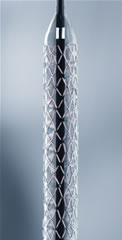
July 30, 2008, Minneapolis -- Reflecting its ongoing commitment to patient safety and clinical research, Medtronic, Inc. (NYSE: MDT), announced today the initiation of the first investigational sites in the United States to participate in PROTECT(1), the company’s global study comparing the Endeavor® and Cypher® drug-eluting stents on key safety metrics, including stent thrombosis – a rare but serious adverse event in which a blood clot forms inside the stent, with the potential to cause heart attack or death. Dr. Carlos Mego and his patient care team at Doctors Hospital at Renaissance in Edinburg, Texas, enrolled the first U.S. patient in PROTECT last week.
Collectively, data from PROTECT augments the comprehensive ENDEAVOR clinical program, which involves more than 21,000 patients; more than 15,000 of these patients will have received an Endeavor stent.
PROTECT is one such trial. With 8,800 patients, it is sufficiently powered to detect a clinically significant difference in rates of stent thrombosis between the Endeavor and Cypher stents. PROTECT’s primary endpoint is overall stent thrombosis at three years; secondary endpoints include death and non-fatal myocardial infarction (MI), as well as customary clinical efficacy endpoints, such as target lesion revascularization and target vessel revascularization. Enrollment is expected to be complete by December 2008, with three-year data on all study patients available in 2012. Very late stent thrombosis (vLaST) – blood clotting inside the stent after one year post-implant – arose as a safety concern with the first generation of drug-eluting stents, including the Cypher stent and Boston Scientific’s Taxus® paclitaxel-eluting coronary stent, in the fall of 2006, when the clinical trials that supported the regulatory approvals of these devices revealed a numerical increase in the rate of vLaST compared to their bare-metal stent controls. These first-generation drug-eluting stents have been associated with an annual rate of vLaST of approximately 0.3 percent through four years of follow-up. (3) The clinical trials that supported the regulatory approvals of the Endeavor stent have shown no increase in the rate of vLaST compared with its bare-metal stent control. The annual rate of vLaST with the Endeavor stent in the ENDEAVOR clinical program through four years of follow-up is 0.02 percent, with no events after two years. This observation served as the rationale for PROTECT. “The Endeavor stent has been so well-received worldwide, most recently in the United States, because it offers such an excellent combination of long-term safety, durable efficacy and renowned deliverability,” said Sean Salmon, vice president and general manager of the CardioVascular business unit’s Coronary and Peripheral division at Medtronic. “Given the consistency with which the Endeavor stent has performed in clinical studies and in clinical practice, we have every confidence that PROTECT will affirm the exceptional clinical results that physicians have come to expect from a second-generation DES. We’re also confident that this trial will deliver the incremental evidence that physicians need to make the best treatment decisions on behalf of their patients with coronary artery disease.” About MedtronicMedtronic, Inc. (www.medtronic.com), headquartered in Minneapolis, is the global leader in medical technology – alleviating pain, restoring health and extending life for millions of people around the world. Any forward-looking statements are subject to risks and uncertainties such as those described in Medtronic’s Annual Report on Form 10-K for the year ended April 25, 2008. Actual results may differ materially from anticipated results. (1) PROTECT stands for Patient Related OuTcomes with Endeavor versus Cypher stenting Trial. (2) Garg P, Cohen DJ, Gaziano T, Mauri L. Balancing the Risks of Restenosis and Stent Thrombosis in Bare-Metal Versus Drug-Eluting Stents. J Am Coll Cardiol 2008;51:1844–53. (3) Mauri L, Hsieh W, Massaro JM, Ho KKL, D’Agostino R, Cutlip DE. Stent Thrombosis in Randomized Clinical Trials of Drug-Eluting Stents. N Engl J Med 2007;356:1020–9. Source: Medtronic Inc |