|
TCT 2010 to Feature New
Heart Stents, Catheter-Based Valve Repair/Replacement and
Drug Effectiveness
Organizers Say Meeting
Will Have Significant Impact on Interventional Cardiology Practices
and
Patient Care
|
 |
April 13, 2010 -- New York -- TCT 2010 (Transcatheter Cardiovascular Therapeutics) will provide significant clinical research updates to technologies and practices in interventional cardiology that will directly affect patient care.
The important role of interventional cardiology has figured prominently in recent current events with the announcement that former President Clinton received a heart stent in February at New York-Presbyterian Hospital, followed by the reporting of clinical trial data showing promising results for a heart valve repair device that is inserted via a catheter.
At TCT 2010 (September 21-25 in Washington, DC), late breaking data from clinical trials on the next generation of stents, valve repair and replacement, and the interactions and effectiveness of new medicines will shed light on the best ways to treat patients.
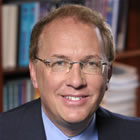
Gregg W. Stone,
MD |
|
"Catheter-based valve repair and replacement,
novel stents, and the effectiveness of various drugs used to treat heart
disease are going to be among the major topics at TCT this year," said
Gregg W. Stone, MD, Professor of Medicine at Columbia University College
of Physicians and Surgeons, Director of Cardiovascular Research and Education
at the Center for Interventional Vascular Therapy at NewYork-Presbyterian
Hospital/Columbia University Medical Center and Co-Director of the Medical
Research and Education Division at the Cardiovascular Research Foundation.
TCT is organized by the Cardiovascular Research Foundation.
|
“Non-surgical aortic valve replacement has the potential to be life saving for
people who are at high risk for open heart surgery,” Stone said. “As the population
ages, this technique may dramatically benefit the quality of life for patients
whose aortic valves (the valve through which blood passes from the heart to the
rest of the body) fail to function properly. We are hopeful that new trial data
that will be presented at TCT will usher in the field of non-operative aortic
valve replacement.”
This year, TCT will also provide a new program, “TCT in 3,” designed
specifically for the busy interventional practitioner, which features a concentrated
curriculum
in a shorter 3 day time frame from Thursday, September 23 through Saturday, September
25. Highlights include live cases, late breaking trials and practice management
sessions.
And once again, the conference will feature specific tracks for Cardiac
Surgeons
and Nurses and Technologists. The Surgeons Course will provide instruction
on percutaneous valve repair, hybrid (joint) surgical and interventional approaches
to heart disease, percutaneous aortic aneurysm repair methods, with an in-depth
course on advanced surgical techniques. The 19th Annual Nurse and Technologist
Symposium will detail new trends and cath lab procedures essential for the
allied
health care professional.
In 2009, TCT was held for the first time in San Francisco,
where it attracted
record numbers of attendees. 99.4% of physician attendees surveyed stated that
TCT increased their knowledge to improve their practice.
More information can
be found online at www.tctconference.com.
About CRF
The Cardiovascular Research Foundation (CRF) is an independent, academically
focused nonprofit organization dedicated to improving the survival and
quality of life for people with cardiovascular disease through research
and education. Since its inception in 1991, CRF has played a major role
in realizing dramatic improvements in the lives of countless numbers of
patients by establishing the safe use of new technologies and therapies
in the subspecialty of interventional cardiology and endovascular medicine.
For more information, visit www.crf.org.
Source: Cardiovascular Research Foundation
|