|
The New England Journal of Medicine Publication of SPIRIT IV Trial Results Confirm Superior Safety and Efficacy of Abbott's XIENCE V® Drug Eluting Stent Compared to TAXUS
Separate, Retrospective SPIRIT IV Cost-Effectiveness Analysis Presented Earlier this Year Concludes XIENCE V Is Economically Dominant Compared to TAXUS
|
 |
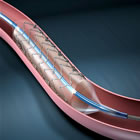
XIENCE V
Everolimus
Eluting Coronary Stent |
|
May 5, 2010 -- Abbott
Park, Illinois -- Findings from Abbott’s SPIRIT IV trial, one of the
largest randomized clinical trials comparing two drug eluting
stents, with 3,690 U.S.-based patients, were published today
in The New England Journal of Medicine. The published study results
show that one year after a stenting procedure, patients treated
with Abbott’s market-leading XIENCE V® Everolimus Eluting Coronary
Stent System were significantly less likely to have a major adverse
event such as a heart attack, repeat procedure or cardiac death,
compared to patients treated with a TAXUS® Express2™ Paclitaxel-Eluting
Coronary Stent System (TAXUS). |
The SPIRIT IV trial also showed that patients treated with XIENCE
V were considerably less likely to experience a blood clot (stent
thrombosis) compared to patients treated with TAXUS. These results
were originally presented during the September 2009 Transcatheter
Cardiovascular Therapeutics (TCT) conference.
In the SPIRIT IV trial’s primary endpoint
of target lesion failure (TLF), XIENCE V demonstrated a statistically
superior 38 percent reduction compared to TAXUS at one year (4.2
percent for XIENCE V vs. 6.8 percent for TAXUS, p-value=0.001).
TLF is defined as a composite measure of important efficacy and
safety outcomes for patients and includes cardiac death, heart
attack attributed to the target vessel (target vessel myocardial
infarction), and ischemia-driven target lesion revascularization
(TLR). The SPIRIT IV trial also found that the one-year rate
of blood clots (stent thrombosis) with XIENCE V is among the lowest
reported to date with any drug eluting stent (0.29 percent per
Academic Research Consortium definition of definite/probable
stent
thrombosis).
In a subgroup analysis of more than 1,100 patients with diabetes, who
typically are sicker and have more challenging artery disease, XIENCE
V demonstrated a numerically lower TLF rate compared to TAXUS at one
year (6.4 percent for XIENCE V vs. 6.9 percent for TAXUS, p-value=0.80).
In the critical safety endpoint of stent thrombosis as presented during
TCT 2009, XIENCE V demonstrated a 40 percent reduction compared to
TAXUS in patients with diabetes (per ARC definition of definite/probable
stent thrombosis, 0.80 percent for XIENCE V vs. 1.33 percent for TAXUS,
p-value=0.52).
" With more than 3 million stent procedures being performed annually worldwide, determining the safety and efficacy differences between various drug eluting stents has important implications for societal health," said Gregg W. Stone, M.D., professor of medicine at Columbia University Medical Center; immediate past chairman of the Cardiovascular Research Foundation in New York; and principal investigator of the SPIRIT IV trial. "With
nearly 4,000 patients studied, SPIRIT IV represents the largest randomized
trial of two drug eluting stents completed to date, and found that
the everolimus-eluting stent significantly reduces a patient's risk
of experiencing a heart attack, stent thrombosis, or the need for a
repeat procedure within one year, compared to the paclitaxel-eluting
stent. Based on these results, and results from the 1,800-patient COMPARE
study conducted in the Netherlands, the everolimus-eluting stent has
set a new standard for patient safety and efficacy."
Separately, in a recent retrospective cost-effectiveness analysis of
SPIRIT IV data, researchers found that the clinical benefits offered
by XIENCE V translated into lower overall medical costs at one year
after the stenting procedure. The SPIRIT IV cost-effectiveness analysis,
presented by David Cohen, M.D., MSc, of St. Luke’s Mid America Heart
Institute in Kansas City, Mo., in March 2010 at the Optimizing PCI
Outcomes symposium sponsored by the Cardiovascular Research Foundation,
found that one-year total medical costs (initial hospitalization plus
follow-up) were approximately $150 lower for patients treated with
XIENCE V than those treated with TAXUS. When costs not related to the
original treated vessel (non-target-vessel-revascularization) were
excluded, the one-year medical costs were approximately $450 lower
with XIENCE V than TAXUS. The XIENCE V and TAXUS stents are competitively
priced.
" The cost-effectiveness analysis of SPIRIT IV shows that a stent designed to deliver outstanding clinical benefits can deliver economic benefits as well," said Dr. Cohen, who is the lead investigator of the SPIRIT IV cost-effectiveness analysis. "Since
the findings were derived from a multicenter, comparative trial with
only clinical follow-up, these results may be generalizable to most
U.S. practice settings."
" The SPIRIT IV data, published today in The New England Journal of Medicine, have changed clinical practice as more and more physicians around the world have embraced the XIENCE V drug eluting stent. With the additional SPIRIT IV cost-effectiveness analysis, we have observed favorable economic data based upon the strong clinical results. These findings should prove valuable as hospitals evaluate different treatment options for coronary artery disease patients," said
Charles A. Simonton, M.D., FACC, FSCAI, divisional vice president,
Medical Affairs, and chief medical officer, Abbott Vascular.
More About SPIRIT IV Results
Clinically, in addition to demonstrating superiority in the primary
endpoint of TLF, XIENCE V demonstrated a statistically significant
46 percent reduction in TLR (repeat procedure) compared to TAXUS at
one year (2.5 percent for XIENCE V vs. 4.6 percent for TAXUS, p-value=0.001).
TLR is one of the major secondary endpoints of the SPIRIT IV trial.
Per protocol definition of stent thrombosis (blood clots) at one year,
XIENCE V demonstrated an observed 80 percent reduction compared to
TAXUS (0.17 percent for XIENCE V vs. 0.85 percent for TAXUS, p-value=0.004).
Per Academic Research Consortium (ARC) definition of definite/probable
stent thrombosis, XIENCE V demonstrated an observed 74 percent reduction
compared to TAXUS at one year (0.29 percent for XIENCE V and 1.10 percent
for TAXUS, p-value=0.004). The ARC definitions of stent thrombosis
were developed to harmonize the definition of stent thrombosis across
various drug eluting stent trials.
In a retroactive look at the economics of using XIENCE V versus TAXUS
from the SPIRIT IV trial, it was observed that XIENCE V was economically
dominant over TAXUS based upon the clinical results. At one year, total
medical costs (initial hospitalization plus follow-up) were $146 lower
per patient with XIENCE V than with TAXUS. When costs not related to
the original treated vessel (non-target-vessel-revascularization) were
excluded, the difference between the two stents became more pronounced,
amounting to a cost savings of $439 per patient with XIENCE V compared
to TAXUS (p=0.02). Excluding the costs not related to the original
treated vessel reflects the cost difference specific to the performance
of the two stents.
The SPIRIT IV cost-effectiveness analysis was based on a retrospective
review of prospectively collected medical resource utilization for
all patients enrolled in the SPIRIT IV trial for initial hospitalization
and one year after enrollment. Cardiovascular hospitalizations, revascularization
procedures, diagnostic catheterization and dual-anti-platelet therapy
costs were included. The analysis assumed equal stent costs for the
XIENCE V and TAXUS stents.
More About XIENCE V
Abbott's market-leading XIENCE V is used to treat coronary artery disease
by propping open a narrowed or blocked artery and releasing the drug,
everolimus, in a controlled manner to prevent the artery from becoming
blocked again following a stent procedure.
XIENCE V is built upon Abbott's market-leading bare metal stent, the
MULTI-LINK VISION® Coronary Stent System. The VISION platform is designed
to facilitate ease of delivery, making it easier for physicians to
maneuver the stent and treat the diseased portion of the artery.
In some geographies, Abbott supplies a private-label version of XIENCE
V to Boston Scientific called the PROMUS® Everolimus-Eluting Coronary
Stent System. PROMUS is designed and manufactured by Abbott and supplied
to Boston Scientific as part of a distribution agreement between the
two companies.
Everolimus, developed by Novartis Pharma AG, is a proliferation signal
inhibitor, or mTOR inhibitor, licensed to Abbott by Novartis for use
on its drug eluting stents. Everolimus has been shown to inhibit in-stent
neointimal growth in the coronary vessels following stent implantation,
due to its antiproliferative properties.
XIENCE V is indicated for improving coronary luminal diameter in patients
with symptomatic heart disease due to de novo native coronary artery
lesions (lesions less than or equal to 28 mm). Additional information
about XIENCE V, including important safety information, is available
online at www.xiencev.com or www.abbottvascular.com/en_US/content/document/eIFU_XienceV.pdf.
About Abbott Vascular
Abbott Vascular is a global leader in cardiac and vascular care with
market-leading products and an industry-leading pipeline. Abbott Vascular
offers a comprehensive cardiac and vascular devices portfolio, including
products for coronary artery disease, vessel closure, endovascular
disease, and structural heart disease.
About Abbott
Abbott is a global, broad-based health care company devoted to the
discovery, development, manufacture and marketing of pharmaceuticals
and medical products, including nutritionals, devices and diagnostics.
The company employs more than 83,000 people and markets its products
in more than 130 countries.
Source: Abbott
Vascular |