
<< To Homepage >>
<<Archives>>
January 2011 Archives:
January 31, 2011 -- 9:45pm EST OCT Wars: St. Jude Versus the Volcano This technology is just now beginning to bridge the divide between research tool and clinical aide -- for example, OCT can show high resolution pictures of stent struts and show whether they are covered or not. So the future for OCT imaging is definitely of major interest. The OCT market currently is divided between two companies: Volcano Corporation (Nasdaq: VOLC) and St. Jude Medical (NYSE:STJ). And, as in any duopoly, one front of competition is the courtroom. So today, the results of a legal decision by the Massachusetts Superior Court were announced by both companies. And to read their press releases, you'd think that both companies had won! Quick (I hope!) back-story: in 2007, Volcano, a company that has led in the field of intravascular imaging, acquired Texas-based CardioSpectra, a company that had developed an OCT imaging catheter, for $25 million. And then, in January 2009, Volcano acquired Axsun Technologies, a maker of laser modules that are central to OCT imaging. That acquisition was for $21.5 million. Then, a year-plus later, St. Jude Medical, a company known mainly for its pacemakers, ICDs and Angio-Seal (a vascular closure device) purchased Lightlab Imaging, a company that had pioneered OCT. They paid $90 million. To further complicate matters, Axsun Technologies was the sole supplier of Lightlab Imaging's laser modules and they had a contract to do so until 2016. So suddenly you had the newly acquired subsidiary of one company supplying the central piece of its competitor's newly acquired subsidiary's main product. No problem, right? Lawsuits? You bet. In any case, last week the Massachusetts Superior Court issued a ruling, and today the results of that ruling were reported quite differently by each company involved. St. Jude was first out of the gate. They claimed in their press release ("Volcano Corporation and Axsun Technologies misappropriated LightLab trade secrets") that the Court had validated their claim of Volcano and Axsun colluding to impede "the growth of a major competitor," and that there was a "scheme orchestrated by Volcano and implemented with Axsun's assistance" to seek to supply LightLab with a less effective laser, and that this would "adversely affect the marketability" of LightLab's imaging system. The bottom line was that the Court found Volcano and Axsun in violation of a Massachusetts State Law 93A, and assessed Volcano a judgment of $400,000 plus reasonable legal fees to be paid to St. Jude, and to be determined by the Court within the next couple weeks. Sounds like a win for St. Jude. Except later in the day, Volcano issued their own statement ("Massachusetts Court Rules in Favor of Volcano and Against St. Jude Medical") in which they applauded the Court's decision. Huh?
Presumably as a result of the initial negative news from the court decision, Volcano's stock price, as of the market's close today, dropped almost 5% since Thursday's high. It would seem reasonable that this might be corrected once the complete impact of the Court's decision becomes known. In any case, even with the severe two-day drop, Volcano's stock price is up 33% from a year ago, not exactly a poor return. More on these OCT Wars as they continue.... « permalink » « send comment » « back to top »
January 18, 2011 -- 9:00pm EST From Angioplasty and Stents to Aortic Valve
Replacement But more importantly than just inventing angioplasty, Gruentzig invented a method for treating patients non-surgically, from the inside-out! What Gruentzig said was:
Englishman John Hunter, considered the founder of "scientific surgery" and the first physician to treat an aneurysm successfully, wrote the following in his 1777 treatise, "The True Principles of Surgery":
So, rather than requiring the "armed savagery" of open surgery, in the 21st century, Gruentzig's "civilized stratagem" is now being applied to areas of medicine that he could only have imagined. For example, diseased aortic valves, previously only repaired via open heart surgery, are now successfully being replaced via catheter-based technologies. There are two major percutaneous (i.e. nonsurgical) devices currently being studied as an alternative to surgically replacing aortic valves in the heart: the Sapien valve, manufactured by Edwards Lifesciences and the CoreValve, manufactured by Medtronic. The PARTNER trial one-year results of the Sapien valve, showed a 46% relative risk reduction in mortality over medical therapy for patients who were too sick to have open surgery, as reported last October in the New England Journal of Medicine. So today, the FDA conditionally approved changes in the just-beginning U.S. trial for Medtronic's percutaneous CoreValve. (By the way, the CoreValve has been approved in Europe since March 2007 and has since been implanted in thousands of patients.) Rather than requiring that the company test their device against "best medical therapy", the FDA agreed with Medtronic that it would not be ethical to randomize patients to medical therapy vs. the percutaneous valve since the data from the PARTNER trial was so compelling as to the advantages of the percutaneous valve. A further boost to the CoreValve trial is that the FDA also approved inclusion of the subclavian approach. Some patients do not have large enough femoral arteries to accept the equipment, or their femoral arteries are too diseased. So now the subclavian artery can be used, although it is somewhat more invasive, and the number of patients who might benefit from this therapy is significantly expanded. « permalink » « send comment » « back to top »
January 6, 2011 -- 7:05pm EST Abdominal Aortic Aneurysm Stent Graft Athlete All too often, our Forum serves as a kind of complaint department -- where patients write in about problems they are having after stents, angioplasty, angiograms, etc. They usually find our Forum through search engines like Google (e.g. look up "Stents Plavix Aspirin"). And these posts are important because on our Forum people can share stories and discover they are not alone. But Kevin isn't having problems. In fact, he writes that he feels "so lucky to be alive" and he wants to find other AAA stent graft athletes to create a community on his blog. So to help him we opened a new topic on our Forum, "Living and Training with an Abdominal Aortic Aneurysm (AAA) Stent Graft". Turns out Kevin has been an "IronMan" competitor for years -- that's him in the photo above, in the summer of 2010, just two weeks before he discovered an aneurysm in his aorta. He had suspected something was wrong and, when this was confirmed by his cardiologist, he was told it was 7cm and was given a 50% chance of survival by the end of the year, unless the aneurysm was treated. So a stent graft was placed in his aorta. The treatment for this type of aneurysm used to require opening the abdomen, excising the aneurysm and surgically repairing the aorta by sewing in a graft -- very invasive open surgery. But in the 1990's an alternative procedure was invented by Dr. Juan Parodi -- using techniques similar to angioplasty, a stent graft was threaded through an opening in the femoral or iliac artery, into the aorta and expanded: no open surgery needed. In the short 6 minute video clip below, Dr. Parodi and colleagues tell the story of the first endovascular AAA repair (from Angioplasty.Org's documentary, "Vascular Pioneers: Evolution of a Specialty" -- you can buy the DVD online.): In the early days, the endovascular stent devices were less sophisticated than they are now, and this less invasive repair was used very cautiously, reserved for patients too sick for surgery, patients so weak that they probably would not survive an open procedure. But now we have Kevin, a 67-year-old IronMan Athlete with an aortic stent graft -- and he's blogging! And...he's moving back into IronMan training, swimming, running, and biking. And...he's looking for patients to share stories and training ideas with. Check out his blog at athletewithstent.com. (For more information on recent studies comparing open surgery and endovascular stent-grafts, see our article "Stent Grafts for Minimally Invasive Aortic Aneurysm Repair".) (This post has been revised to reflect the fact that surgical repair of an AAA is done by opening the abdomen -- thanks to reader DW.) « permalink » « send comment » « back to top »
January 6, 2011 -- 6:15pm EST Philadelphia Transradial Intervention Program:
Take a TRIP The first program in Boston sold out and this one is filling up fast. The TRIP course is being led by Program Co-chairs Kimberly Skelding, M.D., FSCAI and Samir B. Pancholy, M.D., FSCAI, and features "a dynamic mix of didactic lectures, case reviews and simulation training." Dr. Skelding told Angioplasty.Org:
There is also a special Nurse and Technologist Symposium on the schedule. More information and online registration for the course can be found at SCAI's web site. « permalink » « send comment » « back to top »
January 4, 2011 -- 5:55pm EST Angioplasty and Stent Use Cut in Half --
Sort of... In their most recent 193-page Heart Disease and Stroke Statistics 2011 Update, published on December 15, the AHA now states that 622,000 percutaneous coronary interventions (PCI) were performed in 2007 (the most recent period for which stats have been compiled). Previously the AHA reported an annual volume of around 1.3 million -- double the number. How could this be?
Turns out the AHA had been double-counting: procedure one, the balloon is expanded (a.k.a. balloon angioplasty); procedure two, the stent is placed. That was two procedures to the AHA. Except it's really only one procedure. This discrepancy had been pointed out to the AHA for some time, most notably by The Society for Cardiovascular Angiography and Interventions (SCAI) and this year the AHA finally accepted SCAI's recommendation. So what? Well, the AHA annual stats are used by many organizations for many reasons. As SCAI president Dr. Larry Dean stated in a press release:
Right! Like three years ago when the COURAGE study was presented and anti-stent opinion reached fever pitch, with then-AHA president Dr. Raymond Gibbons declaring to the news media that "hundreds of thousands of Americans with stable angina who received coronary stents did not need them ". Err, I meant half the hundreds of thousands of Americans...err...what did I mean? COURAGE addressed only patients with stable angina and found that the addition of stents to medical therapy did not decrease mortality or heart attacks in those patients (although they did relieve angina). At the time, interventional cardiologists defended themselves by stating that most patients who received stents were not those with stable angina -- and that far less people with stable angina were being treated with stents than was being claimed. Guess so.... |
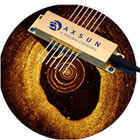 Optical
Coherence Tomography (OCT) is an exciting new imaging technique
that is being used to assess the interior anatomy of coronary arteries
during and after angioplasty and stent placement. (Read
Optical
Coherence Tomography (OCT) is an exciting new imaging technique
that is being used to assess the interior anatomy of coronary arteries
during and after angioplasty and stent placement. (Read  Well,
it seems that the Superior Court's decision was 11 pages long, and
that, while the Court did find Volcano in violation of the Massachusetts
State law, it also dismissed St. Jude's claims of trade secrets being
used illegally, potentially a much more important finding. As Volcano
CEO Scott Huennekens, stated:
Well,
it seems that the Superior Court's decision was 11 pages long, and
that, while the Court did find Volcano in violation of the Massachusetts
State law, it also dismissed St. Jude's claims of trade secrets being
used illegally, potentially a much more important finding. As Volcano
CEO Scott Huennekens, stated: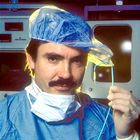 34
years ago, Andreas Gruentzig performed the first coronary angioplasty.
Rather than cutting open the chest, sawing through the sternum
and sewing a bypass conduit (harvested from the leg or internal
mammary artery) into the coronary artery, he elegantly threaded
a balloon catheter to the blockage through a small incision in
the femoral (groin) artery, in an awake patient. He then inflated
the balloon, compressing the plaque against the arterial wall
and opening the artery. The procedure was a total success and
his first patient, Adolph Bachmann, is alive and well today!
(
34
years ago, Andreas Gruentzig performed the first coronary angioplasty.
Rather than cutting open the chest, sawing through the sternum
and sewing a bypass conduit (harvested from the leg or internal
mammary artery) into the coronary artery, he elegantly threaded
a balloon catheter to the blockage through a small incision in
the femoral (groin) artery, in an awake patient. He then inflated
the balloon, compressing the plaque against the arterial wall
and opening the artery. The procedure was a total success and
his first patient, Adolph Bachmann, is alive and well today!
(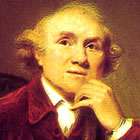 Gruentzig's
proclamation was a fitting answer to a thought expressed exactly
two centuries earlier!
Gruentzig's
proclamation was a fitting answer to a thought expressed exactly
two centuries earlier! One
of the things about working at Angioplasty.Org that warms my heart
(pun intended) is connecting with patients around the world. Our
One
of the things about working at Angioplasty.Org that warms my heart
(pun intended) is connecting with patients around the world. Our  Just
a reminder to you interventional cardiologists, cath lab nurses
and technologists who are interested in learning how to do angiograms,
angioplasty and stents from the wrist -- next Saturday, January
15, is SCAI's second transradial program, being held in Philadelphia
with an "all-star" faculty of transradial experts (see "
Just
a reminder to you interventional cardiologists, cath lab nurses
and technologists who are interested in learning how to do angiograms,
angioplasty and stents from the wrist -- next Saturday, January
15, is SCAI's second transradial program, being held in Philadelphia
with an "all-star" faculty of transradial experts (see "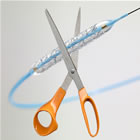 A
lost story this past couple of weeks has been an "admission" by
the American Heart Association that the number of angioplasties
performed in the United States is actually half of what the
AHA has been saying all these years.
A
lost story this past couple of weeks has been an "admission" by
the American Heart Association that the number of angioplasties
performed in the United States is actually half of what the
AHA has been saying all these years.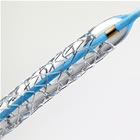 Note
the graphic to the right: you'll see the wire mesh stent mounted
on a balloon (shown here expanded). In almost all PCI procedures,
a deflated balloon with stent is delivered to the blocked area
of the coronary artery. The balloon is inflated, opening the blockage.
At the same time, the stent is expanded against the vessel wall.
The balloon is then deflated and withdrawn, leaving the stent in
place.
Note
the graphic to the right: you'll see the wire mesh stent mounted
on a balloon (shown here expanded). In almost all PCI procedures,
a deflated balloon with stent is delivered to the blocked area
of the coronary artery. The balloon is inflated, opening the blockage.
At the same time, the stent is expanded against the vessel wall.
The balloon is then deflated and withdrawn, leaving the stent in
place.