September-October 2011
Archives:
October 5,
2011 -- 12:10pm EDT
In Memoriam: J. Willis Hurst, MD
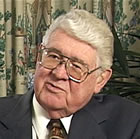
J. Willis Hurst, MD
(1920-2011) |
Sad news out of Atlanta that Dr. J. Willis Hurst
passed away on October 1 after a brief illness, a few weeks short of
his 91st birthday. Hurst
was a major figure in cardiology worldwide, having served as Professor
and Chairman of the Department of Medicine at the Emory University
School of Medicine for 30 years, and the author of "Hurst's
The Heart", undisputedly the "bible" of cardiology,
which is in its 13th edition and has been translated into more than
five languages. It is considered to be the most widely used cardiology
textbook in the world. I know that every cardiologist's office I've
ever been in (and that's a lot) has "Hurst's The Heart" prominently
displayed on the bookshelf.
Above all he was a teacher. Countless cardiologists
went through his classes at Emory and he shaped the views and
outlook of many thousands of physicians. You can read more
about Dr. Hurst in a
letter from his colleagues, posted on the Emory website.
He was a Fellow of Dr. Paul Dudley White, considered the founder
of American academic cardiology, and Hurst served as President
Lyndon Johnson's personal cardiologist for 18 years.
But Hurst also had a hand in fostering what
became a revolution in cardiology.
Back in 1979, Emory cardiologist Dr. Spencer
B. King, III traveled to Zurich to attend the early courses of
Dr. Andreas Gruentzig to learn about his controversial new procedure
called "percutaneous transluminal coronary angioplasty".
King befriended Gruentzig who expressed his concern that, unless
he could keep control over the spread of this new procedure,
it could be destroyed, if it were not done carefully.
Interest was growing rapidly and Gruentzig was looking to move
to the U.S. to establish a teaching center. King suggested Emory
and that is where Gruentzig landed. With significant support
from Emory and the Woodruff Health Center, Gruentzig expanded
the live demonstration course and, from 1980-85 in Atlanta, he
personally trained the first wave of interventional cardiologists,
and established the professional, scientific and ethical benchmarks
of that subspecialty.
J. Willis Hurst, as
Chairman of the Department, was instrumental in meeting Gruentzig's
needs, both academically
and, well...check out the short video clip below. I had the
honor of interviewing Hurst for my documentary, "PTCA:
A History" and he told me what Gruentzig asked for
in order to come to Emory.
Video not loaded
|
J. Willis Hurst, MD
discusses bringing Andreas Gruentzig,
the inventor of coronary angioplasty,
to Emory (:55) |
September
23, 2011 -- 11:20am EDT
Cross-Country
Training for Transradial Wrist Angioplasty
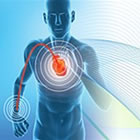 Having
an coronary angiogram or heart stent placed via the wrist approach
is common in Europe. India and Japan -- much less so in the U.S.
-- even though the wrist (transradial) approach offers lower complications
and higher patient comfort. Some studies have even shown that the
radial approach, with its significantly lower bleeding complications,
is superior in treating heart attacks (STEMI) since those patients
need to be on high levels of anticoagulation meds. Having
an coronary angiogram or heart stent placed via the wrist approach
is common in Europe. India and Japan -- much less so in the U.S.
-- even though the wrist (transradial) approach offers lower complications
and higher patient comfort. Some studies have even shown that the
radial approach, with its significantly lower bleeding complications,
is superior in treating heart attacks (STEMI) since those patients
need to be on high levels of anticoagulation meds.
So why are only 5% of U.S. procedures done via
the wrist while figures in other countries run 50-80%? One reason
has been training. In the U.S. cardiology fellows are trained in
the femoral (leg/groin) approach, because that's what's practiced
at their hospitals. So it's been a self-perpetuating practice.
But this is changing. Rapidly.This fall no less
than eight major training courses in the transradial technique were
scheduled: from North Carolina to San Francisco (you can see these
on Angioplasty.Org's list
of upcoming transradial approach training courses) -- more than
were available during an entire year, maybe two, just a short while
ago.
Next up on October 14 is a one-day course in San
Francisco, the
Transradial Intervention Program (TRIP) that since last November
has been held at a number of centers by the Society for Cardiovascular
Angiography and Interventions (SCAI). The following weekend of October
20-21 is the
first advanced two-day course being run by Duke Clinical Research
Institute, which also conducted a one-day course last weekend.
November brings a course at the Mid-America Heart
Institute in Kansas City, MO and then an afternoon of over 20 presentations
at the TCT 2011 meeting in San Francisco, the largest annual gathering
of interventional cardiologists in the U.S.
Patients and physicians who want to learn more
about this growing technique can read more about it at Angioplasty.Org's
Transradial Access Center.
September
8, 2011 -- 6:45pm EDT
Transradial Angioplasty Training in Las
Vegas
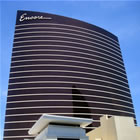 This
weekend Richard R. Heuser, MD, FSCAI and John E. Lassetter, MD, FSCAI
of St. Luke's Hospital and Medical Center in Phoenix, Arizona will
be conducting a
one-day course in transradial (wrist) angioplasty at the Wynn/Encore
Hotel in Las Vegas, Nevada. But the games of chance will be relegated
to the casinos because, as Dr. Heuser recounts in his
exclusive interview with Angioplasty.Org, the wrist approach
to diagnostic and interventional coronary procedures is safer for
patients, more comfortable for patients and (trumpet fanfare) has
the potential to reduce costs of healthcare as well. This
weekend Richard R. Heuser, MD, FSCAI and John E. Lassetter, MD, FSCAI
of St. Luke's Hospital and Medical Center in Phoenix, Arizona will
be conducting a
one-day course in transradial (wrist) angioplasty at the Wynn/Encore
Hotel in Las Vegas, Nevada. But the games of chance will be relegated
to the casinos because, as Dr. Heuser recounts in his
exclusive interview with Angioplasty.Org, the wrist approach
to diagnostic and interventional coronary procedures is safer for
patients, more comfortable for patients and (trumpet fanfare) has
the potential to reduce costs of healthcare as well.
And Dr. Richard Heuser has been performing PCIs
since the beginning days of balloons and stents -- so his perspective
on why the transradial approach offers significant benefits is definitely
of import to cardiologists across the U.S.
As he states in his interview, if you utilize the
transradial approach:
"...you'll reduce your likelihood
of vascular complications by four times, and if you look at
the most comprehensive head to head trial, the RIVAL trial,
you'll see that you will not give up anything in terms of safety
and efficacy. You will give up the fact that you will have
more blood transfusions and more vascular complications going
femorally and, if you look at the sites that were high volume
radials, they actually had an improvement in hard outcomes
-- that's MI, and morbidity, and mortality. So I think that
if I could be so bold as to say, you're doing your patients
a disservice if you don't at least consider radial an option
in patients... even to the point that they request it...because
the reality is, they are going to be requesting it." |
Read
the entire interview here....
|