supported by Terumo Medical Corporation


Editor's Blog


Imaging and Diagnosis of Coronary Artery Disease


About Us
Donate Now to Angioplasty.Org


Radial Access Center Radial Access Center
Angioplasty.Org HomePatientCenterBlogDiscussion Forum
Home » Radial Access Center

Sign Up Now!
Sign up for news alerts, special features and training opportunites.

Radial Approach Overview
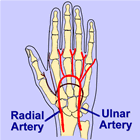
Radial and Ulnar Arteries    

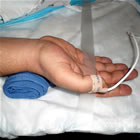
First described in 1989, the use of the radial artery in the forearm for angiography and angioplasty offers a lower complication rate and a higher degree of patient comfort. Widely used in Europe and Japan, the transradial approach is starting to gain popularity among physicians in the U.S. (Read more...)


NewsCenter: Reports and Features
Breaking news, original reporting and links to transradial access-related news stories.
Is Radial Angioplasty at a Turning Point in the United States?

Angioplasty from the Radial Artery in the Wrist is Safer, Says Study of 600,000 Patients

White Paper: Transradial Cardiac Catheterizations Using Optitorque Catheters

Interest in Transradial Angioplasty Growing Among U.S. Cardiologists

Another Way To Rescue A Threatened Heart: Through The Wrist (from Florida Today)

Wrist Angioplasty Associated with 50% Less Blood Transfusions and Lower Mortality

Angioplasty from the Wrist: Transradial Approach Offers Benefits to Patients and Physicians

Hospital Locator
For Patients in the United States: Find a hospital near you where transradial angiograms and angioplasty are performed.


External Reference Material and Bibliographic Links
A listing of journal articles and web links about transradial access and related topics. These are provided as a service by Angioplasty.Org, which is not responsible for the content found on any external sites.

Discussion Forum
Angioplasty.Org hosts a Forum for topics in interventional cardiology. In some of the most posted-to threads, patients discuss complications they have encountered, often involving femoral access.
  Patient Forum

In the topic about radial access, patients describe their experiences with transradial angioplasty. A recent patient stated that he felt "more pain at the dentist having a filling" Other relevant topics deal with complications from the femoral approach. While these postings represent a small percentage of all catheterizations performed, it is instructive to read these stories to help recognize and treat these occurrences.
•   Post your experiences with having the radial approach to angioplasty
•   Femoral Complications from Catheterization or Angioplasty
•   Angio-Seal, StarClose and Other Vascular Closure Devices

Terumo Medical Corporation

Training Opportunity in Phoenix
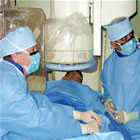
A one-day training course in the transradial access technique is being held at Maricopa Medical Center in Phoenix, Arizona on December 5, 2008. Course Director Mehrdad Saririan, MD says the morning session will consist of didactic presentations, case reviews and in-service training with simulators, with the afternoon devoted to live case observation. Details on the course schedule and registration information can be found here (PDF).

To receive announcements of upcoming courses, announcements and news about the transradial approach, sign up for our Radial Newsletter.

 
Angioplasty.Org Interview with:
Samir B. Pancholy MD, FACC, FSCAI
Samir B. Pancholy MD, FACC, FSCAI     Dr. Pancholy is currently affiliated with Mercy Hospital & Comm. Medical Center in Scranton, PA, as well as several other nearby hospitals. He is considered an expert in the transradial approach and has conducted courses on the technique.

Q: What was the magnitude of reduction of radial artery occlusion using the TR Band?
Dr. Pancholy: Very, very significant. In our database which was 250 patients in each arm, we had about 55%-60% decrease in early and chronic occlusion with the TR Band vs. the HemoBand, which is a real big deal because occlusion is by far the only complication of the transradial procedure that is considered to be worthwhile as far as being concerning and one which limits future access.
(Read entire interview...)


Also read the Angioplasty.Org Interviews with:
Tak W. Kwan MD, FACC, FACP

    Dr. Kwan is an Associate Clinical Professor of Medicine at the Albert Einstein College of Medicine in NY and is also an NYU School of Medicine Senior Associate. He is Director of the Cardiac Cath Laboratory and Interventional Cardiology at Beth Israel Medical Center in Manhattan.


Mauricio G. Cohen, MD, FACC

A native of Argentina, Dr. Cohen joined UNC School of Medicine in 2003 where he is Associate Director of the Catheterization Laboratories and Director of the UNC Healthy Heart Latino Initiative, providing health care services and outreach to the growing Latino community.     Mauricio G. Cohen, MD, FACC

Shigeru Saito, MD
Shigeru Saito MD     Dr. Saito is one of the leading supporters and practitioners of transradial coronary intervention (TRI) in the world. He introduced the technique to Japan over a decade ago and has traveled the world to teach and demonstrate the benefits and techniques of this alternative approach.


Howard Cohen and Kirk Garratt

Drs . Cohen and Garratt are part of the interventional team at the Lenox Hill Heart and Vascular Institute of New York and both use the transradial approach as their first choice for catheter access.     Howard Cohen, MD and Kirk Garratt, MD, MSc

John T. Coppola, MD
John T. Coppola, MD     Dr. Coppola is recognized as an expert in performing transradial catheterization. He has presented this procedure to interventional cardiologists worldwide and regularly brings experts in the transradial technique to St. Vincent's in Manhattan for a special course.

R. Lee Jobe, MD
Dr. Jobe is Chairman of Invasive Cardiology at Wake Medical Center in Raleigh, North Carolina. He considers the radial artery approach to be his primary choice for catheter access to the coronary circulation when performing percutaneous procedures because of the benefits for both his patients and his practice.     R. Lee Jobe, MD

Jeffrey J. Popma, MD
Jeffrey J. Popma, MD     Dr. Popma is the Director of the Cardiac Catherization laboratory at St. Elizabeth's Hospital in Boston. A regular speaker at major cardiology meetings, he has published more than 280 peer-reviewed manuscripts and has served as president of the Society for Cardiac Angiography and Interventions (SCAI)

Angioplasty.Org Home •  PatientCenter


send comments & suggestions to "info at angioplasty dot org"
read Terms of Use and Privacy statement

Angioplasty.Org is an independent educational health site
The Radial Access Section of Angioplasty.Org is supported by
Terumo Medical Corporation
Unless otherwise noted, all content, including text, photos and video
© Copyright Venture Digital LLC 1996-2008