|
|




April 8, 2009 -- A new study, published online before print in Circulation: Cardiovascular Interventions, concludes that:
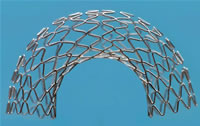
A peri-procedural MI is an event that occurs during or shortly after a procedure -- in this case, angioplasty with stent placement. The peri-procedural MI tends to be relatively small and is not associated directly with higher rate of death. However, it is a complication. Four years ago, Dr. Gregg Stone reported the results of the TAXUS V study which showed good results for this drug-eluting stent, but Dr. Stone also reported a slightly disturbing statistic: a 2 1/2 fold increase in peri-procedural myocardial infarctions in patients who required more than one stent. This new study, authored by a team led by Dr. Jeffrey Popma of Beth Israel Deaconess Medical Center in Boston, has reported similar data: the Taxus Express paclitaxel-eluting stent resulted in almost twice as many side-branch occlusions as the Endeavor zotarolimus-eluting stent. The difference, according to comments made by Dr. Popma to Angioplasty.Org, seemed to be tied to the design of the stent:
In fact the thinner struts and more biocompatible polymer of the Endeavor stent may be key in the reduction of side branch occlusion -- a closing off of small arterial branches of the major coronary arteries, around 1mm in diameter. The clinical consequences of these events are not well-known, although by definition a peri-procedural myocardial infarction is considered in the rate of MACE (Major Adverse Cardiac Event). As Dr. Popma states:
Dr. Popma also noted that the newer drug-eluting stent from Boston Scientific, the Taxus Liberte, has not shown such higher rates of side-branch occlusion. Yet the authors of the paper noted that the Taxus Express stent’s greater thickness may obstruct the origin of the branch vessel, and restrict flow into the distal vessel. Or, because of the Endeavor stent’s thromboresistant phosphorylcholine coating, there may be less enhanced platelet aggregation and embolization into the side branch with Endeavor vs. Taxus. The bottom line is that stent design has advanced since the initial first-generation stents, with better, more biocompatible polymers, and thinner, more flexible struts.
Reported by Burt Cohen, April 8, 2009 |