|
Current Postings on This Page (166):
Dia and Rizwan -- sometimes a feeling of weakness
or fatigue can be caused by one of the medications typically given to heart
patients. In any case, you should consult your interventional cardiologist
about these feelings. And ECG will diagnose any abnormal electrical activity
in the heart, but that's fairly limited.
Forum Editor, Angioplasty.Org, May 8, 2008
Hi am 44 yrs. I got angioplasty done on18th March
2008 i am feeling better
but i do have some choking in the throat & sometimes i feel tired walking also
my left hand pains a dull pain. The left arm feels weak & sometimes it pains
sometimes when i chant my prayers i feel tired i got my ECG done it was fine.
do these
symptoms go or how long do they stay?
Dia, Dubai, United Arab Emirates, May 7, 2008
10 months ago I got my angioplasty done, two
stents were used. Since then I am working normally, taking normal diet
but getting weaker and weaker day by day. What's the reason behind that
??
Rizwan Khan, Jeddah University, Karachi/-/Sindh/Pakistan, April 25, 2008
Cardiolite stress testing (a.k.a. nuclear stress
testing) is a functional test that shows any "perfusion deficit" -- lack
of blood flow to the heart muscle. It's not 100% accurate, but few tests
are. Increasingly some cardiologists feel that a multislice CT scan
can
more accurately diagnose the presence of coronary artery disease.
Beyond that another angiogram, using intravascular ultrasound
(IVUS) would be even more accurate, but these procedures all have some
risk associated with them (CT has some radiation exposure, about the same
or less than a Cardiolite test; an angiogram -- well you know, you've
recently had one.) Ask your cardiologist and explain your concerns. Anxiety
can affect your health. Piece of mind is a very important, and often overlooked,
therapy.
Forum Editor, Angioplasty.Org, April 13, 2008
Please help me. I am a 54 year old firefighter
who has been doing semi intense cardio training for years. I was engaged
in a strenuous drill at work
when I felt be even in my neck and left shoulder. The discomfort
went away but reappeared during my cycling and speed walking routines.
Of course
I attributed
this discomfort in my left arm, shoulder and neck as some kind of neuro problem
associated with the drill at work. However, the problem intensified in the arm
two weeks later, I went for a cardiolite stress test, and they found 90% blockage
of my LAD. The next day a Taxus Express 2 stent. Started "Mall Walking" with
the wife 4 days later. Still felt some discomfort in left arm and redid the cardiolite
--
showed normal so I began to resume more strenuous activity. My questions are:
1 - The cardiologist says its OK to work my way back to original fitness regiment,
Rehab Nurse says normal exercise range is now 40 beats over walking into the
clinic heart rate which is 85 plus 40 = 125. I used to keep average heart rate
when taking spin classes at 142. What's the general consensus? I am currently
on Plavix, Toprol XL, and aspirin, 2 - I feel a strange feeling in left forearm/hand
- icy hot feeling when heart rate gets over 125. Is this normal? a) should I
insist on a different test to insure the LAD is fully open over and beyond the
cardiolite,
maybe a CAT scan- before I return to full work duty?
Scott, Los Angeles, California, USA, April 7, 2008
I had a stent put in 2 months ago and am keen
to return to my previous exercise levels, including running marathons.
However my GP has banned me from running until my blood pressure reduces
from 150/90 - it was 140/80 before stenting. I can't understand why it
has not decreased as I now take a 5mg of Lisinopril daily, now to be
increased to 10mg. Do I need to try something different, such the non-drug
methods
advertised?
Hugh, United Kingdom, April 3, 2008
I am 58 year old male. Had chest pain for 6 months.
They could not find the problem. Finally last week they did a nuclear stress
test. They found a blockage
in artery. 2 days later i had stent put in. That was 6 days ago, Haven't had
a cigarette in 6 days longest I have ever gone. I'm having night sweats though
-- wake up soaked. but feel fine beside that Doc says i can walk and go back
to lifting
dumbbells.
Bud P., California, USA, March 19,
2008
I had 2 stents put in in Oct 07. I participated
in a cardiac rehab program and completed 30 sessions of the 36 prescribed
with no problems exercising. I felt great. Suddenly before session 31
my heart rate was high at 120 after exercise warm up. I sat and it declined
to 80, and proceeded to complete my exercises. My heart rate accelerated
again on the tread mill and bike and I became winded and weak. I terminated
the session. I am on toprol (25 milligrams). I called my cardiologist
and
she increased my toprol dosage to 50 milligrams and said no exercise
for a week. Has anyone had similar sudden set back? What do you think is
going
on?
71 yr old male.
RJ, March 11, 2008
Hi all. I need your advice. I am a 33 year old father of 2 young kids
and a wife. I just had an Angiogram and they had to place a Stent "one" in one
of my veins in the heart LAD. Can you please give me some advice on what you
recommend I should do to improve my diet and what I should do and not do as far
as food is concerned. I was very worried and was negative but can someone please
advise when I can return to normal activity and so on please? I was lucky. Your
advice
will be appreciated. Thanking you.
Huss, Melbourne, Australia, March 10, 2008
Tom,
I think you need an angiogram... I'm no doc but those are classic
blockage symptoms. At least see another doctor.
Dan, March 7, 2008
An
interesting article about a 64-year-old
from California who, after 4 angioplasties, still felt tired, no energy,
etc. His solution: lose weight, start becoming physicially active. He just
completed his 7th "boot camp" session. We're not advocating this particular
regimen, but just noting that it is possible, with a supervised program
(preferably one connected to a heart program) to increase one's energy
and well-being.
Forum Editor, Angioplasty.Org, March 1, 2008
Hugh -- good for you. It's funny, but
when rock stars like David Bowie and a number of government leaders, sports
figures,
etc.
continue
their strenuous activities after stenting, no one tells them to see a shrink.
Forum Editor, Angioplasty.Org, February 27, 2008
Thanks. The only problem is my cardiologist is
not an exercise fan and thinks marathoners should see a psychiatrist! However
the hospital where I had the angioplasty has a 6/7 week cardiac rehab programme
by the end of which I hope to be back to somewhere near normal activity
levels. Meanwhile I am listening to advice from various quarters to take
it steadily.
Hugh, United Kingdom, February 26, 2008
Dear Tom D, Talk to your cardiologist again. I
am not a cardiologist but am 55 yrs old, I am a physician, and now have
4 stents (2 in 12/06 and two in
01/08) with (knock on wood)no heart damage yet. From my experience you need
to be cath'ed again. Now. Each time I had the symptoms you describe (three
times)
it was a fresh blockage. The stress test, in my opinion, is a pretty worthless
test; especially in an athletic, otherwise healthy person. (personal experience
disclaimer of objectivity: my 75 yr old mother and I each had negative stresses
6 months before my mother's MI and CABG and my cath and stents.) I am sorry,
but from my dilettante point of view, the least you could even consider to
get by to diagnose the cause of your symptoms would be a 64 slice cardiac
CTA.
PA Doc, Pennsylvania, USA, February 26, 2008
I am 35 year old male and had a stent put in
Nov 19, 2007. After the stent I felt great and start to slowly get back
to exercising; walking mostly. But recently, I started to get tightness
and achiness in my left arm again and went back to my doctor for a stress
test. He said everything looks good and normal but I still feel this
achiness. He thinks it is a pinch nerve and suggested a MRI so I will go
it. But
is anyone else out there experiencing or experienced the same thing?
I find myself short of breath when climbing stairs or heavy walking again.
Not sure what to think but any suggestion or comments are welcomed.
Tom D, Mission Viejo, California, USA, February 21, 2008
Hugh from UK -- and this applies to many of the
posters to this topic -- advice to all is post-heart procedure, discuss
your exercise regimen with your
cardiologist.
Every
person's capacity
is different. As for rotablation, that is used when a lesion (blockage)
is highly calcified, something a balloon or stent doesn't fix so well.
The other question is whether a stent is necessary, or could POBA (Plain
Old Balloon Angioplasty) work as well? Discuss these option with your cardiologist,
making sure he understands your lifestyle.
Forum Editor, Angioplasty.Org, February 20, 2008
I am a keen 30mpw runner who has completed 72
marathons - target is 100. I recently had an angiogram after suffering
from breathlessness and am due to
have angioplasty on one partly blocked artery shortly. Would the blockage have
affected my performance before I became aware of the symptoms and, if so, should
I be able to run faster after the procedure than before I became breathless?
I have several questions: After the angioplasty is carried out, should the
artery be almost as good as new? Is there any benefit in having rotablation
rather than/as
well as a stent? Does having a stent make running etc. more risky? Should I
ease back into training gradually afterwards or carry on from my current
30mpw? Is
it ok to resume gym activities [that don't currently cause breathlessness]
afterwards, including lifting weights?
Hugh, United Kingdom, February 8, 2008
Elliott -- since you're from Iowa, we'll guess
that you can't wait to get into shape for RAGBRI,
eh? As we advise everyone, discuss exercise regimen with your cardiologist
-- who knows your clinical situation best.
Forum Editor, Angioplasty.Org, February 8, 2008
51 year old male who cycles regularly and has
for 5 years, a runner before that but stopped due to knee pain. Just
had 95% blockage corrected with a stent, now taking aspirin, Plavix, etc.
What
kind of physical activity can I expect to be able to perform, should
I still plan on being able to complete 100 mile rides once I get back in
shape? How soon should I start workouts, the stent was implanted 7 days
ago?
Elliott, Des Moines, Iowa, USA, February 6, 2008
Greetings! I am 65 years old. Last March (2007)
I had Taxis stent inserted into the L distal anterior descending artery
which had 80% blockage. I have 90% lesion of the high first obtuse marginal
at its take-off and being the ostial lesion it was not an ideal lesion
for intervention. In addition, I have R coronary with 60% posterior lateral
artery branch stenosis. I also had pacemaker installed several days after
the stent was inserted due to bradycardia. I take Plavix and aspirin plus
Toprol (beta blocker) for mild hypertension. I had been physically out
of shape and weighted 265lbs. With diet (95% veggie) and exercise I now
weigh 193lbs and hope to get to mid-180s soon. Total cholesterol=140, Triglicerides=60,
LDL=82, and HDL=46. My cardiologist would like the LDL to come down below
70
to "freeze" -- even possibly reverse -- arteriosclerosis at the 90% blockage
area. My LDL has been declining and the HDL increasing. The beta-blocker has
been reduced from 100mg to 50mg as my BP has declined. I started walking immediately
after I got home. I had a few aches and pains but they soon went away. I went
from slow barely walking to shuffle-jogging for 10 seconds to the point where
today I do about 30 minutes of interval running. After warm up I run (1 minute)
to reach my maximum heart-rate and then do 2 minute cool-down to recover and
then do the next interval. This type of exercise creates oxygen debt and leaves
one breathing heavily after each interval. I try to use this period to expand
my lungs. Over time I have been able to increase the max heart-rate target level
(130 to 145 in about a year) as I have become more conditioned. I generally do
about 10 intervals. I take care do not overdo it. I have absolutely no discomfort.
However, my concern is that although the cardiologist said it is okay for me
to run I am concerned about that 90% blockage area. I am aware that each person
has his/her own unique situation, etc. but I can't help but wonder if, in general,
it is prudent to do interval training exercise with such blockages (even though
I am taking Plavix and aspirin) and if others exercise with similar blockages.
John K., Texas, USA, February 3, 2008
I am 49 years old and have been jogging for 26 years 3-4 miles a day 5
days per week. On Oct. 29 I passed out after my daily 3 mile jog and had noticed
in the last 3 months that my breathing became more labored at the 1 mile mark.
I went to my doctor and he had me do a Echo Stress test which indicated that
I may have blockages. I then had an angiogram which showed a major narrowing
in my right artery, 2 smaller blockages in my left and a branch of my circumflex
100% blocked. The doctor did not stent me at that time but said I might be a
candidate for bypass surgery. My doctors decided that one of their expert cardiologists
could treat me with stents. On December 13th I had 6 Cypher drug eluting stents
placed which treated all of my blockages. I currently am on Plavix, Altace, Lipitor,
Niaspan, & aspirin. My doctor set up a exercise schedule as follows: 3 weeks
walking 20 minutes at 3 mph. 2 weeks 30 minutes at 3 mph. 2 weeks 30 min. at
3.5 mph. 2 weeks 30 min. at 4 mph. 2 weeks 30 min. at 4.5 mph and then increased
time to 45 minutes at 4.5-5 mph (jogging at this point). I am pleased to say
that I am doing extremely well at the 3.5 level without any pain or shortness
of breath. I would also want to point out to the other runners out there, that
my only risk factor was borderline high cholesterol (235 TC, 178 LDL, 34 HDL)
I did notice over the last 10 years that my HDL had dropped from 48 to a low
of 34. My cholesterol now after several weeks on the above medications is 122
TC, 68 LDL, 37 HDL. I am hoping that the Niaspan gets my HDL back up to the high
forties Has anyone here have had 6 or more stents and have continued jogging?
David B., Louisiana, USA, January 21, 2008
Terry from the UK -- chelation therapy has never
been proven to have any benefit, although there's currently a trial sponsored
by the US NIH -- results still a year or more out. Same with Co-Q10, although
some think that might be more helpful in other ways. We don't know of any
down-sides to these therapies, other than the expense and the cases where
patients use them INSTEAD of working with their cardiologist.
Forum Editor, Angioplasty.Org, January 19, 2008
My father is 57 and has just had a stent put
in after a slight heart attack caused by a blockage, he has been a bodybuilding
since he was at school and only stopped about 6 months ago due to deteriorating
health. He had real trouble eating
and lost a lot of muscle, he's 5'8" and weighs 182lbs now, he weighs about 220
to 260lbs in normally and has never taken steroids. While in hospital he was
also informed that he now has diabetes, probably from not being able to eat properly,
however he is eating normally now. I have two questions, firstly, can you have
chelation therapy after having a stent fitted? Secondly, my father is on statins
which apparently rob Q10 from the heart, is he ok taking Q10 as a supplement?
Terry Turner, UK, December 29, 2007
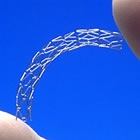
PA Doc -- your theory gives patient-observed credence
to something we recently discussed with several top cardiologists. One
of the hopes for newer devices, such as the bioabsorbable stents currently
being researched by Abbott and Biotronik, is that a bioabsorbable stent
will disappear in time, when it has done its work, and allow the artery
to function and move freely. Although modern stents have made great advances,
they still are metal "straight-jackets" in effect, so perhaps your theory
is correct. Thanks!
Forum Editor, Angioplasty.Org, December 27, 2007
I underwent two stents in 10 days with no known
cardiac damage one year ago. Here are a couple of thoughts. First, even
though I was actively exercising
right up to stenting, I did think it prudent to slowly advance my exercise. After
all, part of my heart had not had optimal blood flow for God knows how long.
Secondly, I have noticed, when I start to exercise it is not uncommon for me
to develop mild anginal aching. But unlike before my stents, this peaks fairly
quickly and then goes no further. If I start out slower it seems to not occur
as much. A friend who underwent stenting several years before me noted the same
thing and mentioned it to me without my having brought up the subject. My theory:
the stents fix the diameter of the artery. Therefore, unlike in a healthy artery
where the artery is very distensible and adapts quickly to the increased blood
flow, the stented artery has a more limited capability to adjust (quickly) to
the increased needs by the myocardium for more blood. These are just my thoughts
as a non-cardiologist physician. Anyone else have observations?
PA Doc, Pennsylvania, USA, December 26, 2007
I had a stent in my right coronrary artery on
12-18-07. When can I start
weightlifting and running again?
Alan, California, USA, December 25, 2007
Nancy -- were you given a prescription for a rehab
program? Recent studies have shown that less than 1/3 of heart patients
are. Although it sounds like your fatigue may be related to the meds, given
your history, your cardiologist is the best source of help. Perhaps he/she
can adjust your medical therapy re: the fatigue, make sure your red cell
count is sufficient, etc. especially for someone who is on three blood
thinners (aspirin, Plavix, coumadin). And any exercise program should be
done in conjunction with a cardiologist, or healthcare professional affiliated
with a cardiology center. Too often the after-care of heart patients is
not implemented fully. Good luck and please let us know how you fare.
Forum Editor, Angioplasty.Org, December 23, 2007
43 yr old woman, no menopause symptoms yet, healthy
(5' 2" 130 lbs) been active w/ kids and exercise (walk/jog daily- with
6 kids ages 5 to 19). I had a spontaneous dissected artery in late August
causing MI and 2 medicated stents placed in emergency procedure. 2 days
later a spasm-ing artery would not open, causing ischemia, balloon angio
attempted to open it did not work, so two more bare stents placed to hold
the artery open. Nuclear stress test showed mild heart damage but good
ejection fraction. Had no prior risk factors-cholesterol good etc.(Except
similar but milder angina/spasm like symptoms 8 yrs ago resolved without
treatment). Taking plavix, coumadin, norvasc, aspirin. Cannot get my coumadin
regulated blood remains too thick. I wonder what risk I take with strenuous
exercise. Strenuous activity (moving furniture-carrying 7 yr old son upstairs
in play) preceded the MI by a day . Also an emotional upset immediately
preceded it. Have resumed exercise but still wonder can I exercise safely?
Do I have to remain on meds forever (side effects like 12 day long period
and much bruising-yet blood still thick at protime). Fatigue causing me
to fall asleep during day if I sit down, or driving making me too sleepy
(caused by meds?) Otherwise no angina/spasm symptoms, just fluttering/skipped
beats persist on certain days, but entirely absent on other days.
Nancy, California, USA, December 18, 2007
Neeru -- read through some of the posts here and
you'll see that exercise and physicial activity after angioplasty is
very important. Your father should consult with his cardiologist as to
what
the proper level of exercise, yoga, etc. is safe. Usually start slowly
and build up to it.
Forum Editor, Angioplasty.Org, December 14, 2007
My father got two stents in his arteries 3 months ago. He is 47 years
old, as his two arteries were blocked 99% and third was 20% blocked, so now can
he do any yoga or exercise, because he has been so weak there before, and feels
weakness in his body and in his mind, after talking and walking for sometime.
Please help me by replying.
Neeru, Haryana, India, December 12, 2007
P.M. in New York -- congratulations
on identifying and taking care of the symptoms -- your blockage is now
open,
treated prophylactically,
and without any damage to your heart muscle -- a scenario that really has
only been possible since the invention of angioplasty. If you look at the
recent "Nike-like" TV commercial put out by Cordis, maker
of the CYPHER stent, you should be able to do all sorts of physical activity.
But we urge you to ask this question of your cardiologist -- ideally the
one who did the procedure. Each individual has his/her own clinical profile,
and getting back to an active life is the whole idea (after all, David
Bowie rocks out on stage with a stent in his heart...) -- but you should
be guided by your physician, so it's done in a manner best suited to your
physical status.
Same advice to Professor Das in India as to whether brisk
walking is advised. We assume, by the way, that you have stopped smoking
altogether -- smoking is one of the biggest risk factors for coronary artery
disease. As for Ecosprin, which is a brand of enteric-coated aspirin made
in India, clopidogrel and aspirin both are antiplatelet, or anti-clotting,
drugs -- but they work differently and are used together as
standard therapy prescribed after stenting, also used in together in other
cases as well. However, these types of drugs can also result in increased
risk of bleeding, so these issues should be discussed with your doctor.
Forum Editor, Angioplasty.Org, December 6, 2007
I am 66 and have had a sedentary life for about
last 20 years. I was smoking about a packet of 10 cigarettes till 2000
March. Of course again smoked 5 cigarettes in September 2007 in 5-6 days.
I don't take alcohol. In 2003 without any symptoms I went for a package
for normal check up in a local hospital. They found my TMT positive for
inducible ischemia. Again I had a similar checkup up in November 2007
and was positive for inducible ischemia in TMT and was advised for angiography.
On doctor's advice I am taking ecosprin 150 mg, Atorvastatin 10 mg (i
have
serum Cholesterol 226.3 mg/dl, S.triglyceride 98.8mg/dl,HDL 54.5mg/dl,and
LDL 135.8 mg/dl and VLDL 19.7mg/dl.Eco-cardiography showed No RWMA, Good
LV Systolic function, but Diastolic dysfunction. I am also taking Nitroglycerine
2.6 tab and metoprol25 as a preventive measure. Another doctor is advising
to take Clopidogrel in stead of Ecosprin. I am also advised not to go
in for brisk walking which I started after the last test. Can I be advised
by you Sir? I feel fortunate to have a forum like this to discuss my
problem.
Thank you.
Prof.Narendra Prasad Das, M.Sc,; Ph.D. (Zoology), Retired, India, Thursday,
December
6, 2007
Just got out of the hospital last week! i am a
42 yr old male ex collegiate tennis player and have a very stressful banking
position. Was wondering also
what to expect moving forward. i had a stent put in for a 99% blocked left
artery. Couldn't believe it at first and was shocked. Symptoms showed likely
a week before
when i was playing tennis and for the first time ever experienced shortness
of breath which went away after sitting down. Cut a long story short I
went to the
hospital 6 days later and the received the PTCA and stent. My cholesterol was
255 and too high. Your posts have been very inspirational and I'm going to
make this best of this second chance. Would like to know when i can expect
to get
back to exercising fully?
P.M., New York, USA, December 5, 2007
The answer to this will vary from one individual
to the next since it depends on so many variables. It will also depend
on the person's doctor or cardiologist since some may be conservative
while others may be aggressive.
Raul, Philippines, November 4, 2007
can a person suffering with angina and with stents
contnue his work
normally?
jk, marketing, jalandhar/punjab/india, November 2, 2007
I had a stent May 18, 2002, than another October
17, 2007. I am curious what level of exercise might be prudent. In the
8 days since I was released,
I have run 40 miles including a half marathon where I ran my best time of the
last 11 months. Is this normal, excessive, dangerous?
Ed T., Texas, USA, November 1, 2007
Sir, I had an angioplasty done in October, 2007,
Two stents have been placed in my arteries which had a blockage of about
70%. I am not diabetes patient and i have not high bp problem and my
cholesterol is normal after attack could you please tell me what kind of
precautions
should i take and what kind of fitness
exercise should i do?
Shadab Ahmad, Banaras Beads , Varanasi (India), November 1, 2007
Hello This program is very usefull and interesting,thanks
for you. My age is 64 years, every year i make check up for my whole body.From
about 2 months,
I check up my heart & the doctor tell me that it is safety for me to put 2 stent,
since Iam feeling till now very good.(I have 70% and 90% closing).I did it, and
he gave me plavix+baby aspirin(80) + fish oil +crestor. Till today i feel nothing
changes in my body(I forgett to tell,I stopp smoking),I ride every day my bike
for 2 hours. is their any thing else to do.& how can i check my stent if they
are working good or not, is their a way for that. thanks thanks & thanks
Kamal D., Lebanon, October 31, 2007
Hi Colin I too am from UK and have had 2 stents
fitted at different occasions. I must admit that I have never received
any info regarding exercise progs at
all and I have asked. So i just do what i can until i feel any tightness in
the chest, but have had another stress test which I have failed so it looks
like
back to the hosp for another angio.
Tel, UK, October 15, 2007
I am aged 65, having had heart failure in April
this year. I was rushed to Western General in Edinburgh, where they put
a balloon in the main artery to keep it open. From there I was rushed
to the Royal Infirmary Edinburgh (RIE), as they could`nt do anything for
me
due to the heart being in the condition it was. They could`nt give me
a bypass, as during my stay in the Western I must have had a heart which
left me with a small part of my heart having died, and the heart beating
for six hours at 120 per min. They thought I was`nt going to make it,
that
was until Dr Neil Uren decided he was going to try and put stents in,
and that his odds were better than 1 in 5 chance, of which I was given,
if
they had decided to go ahead with the triple bypass. Of course I decided
to go ahead with it, putting two stents in the main artery, of which
99% was shut, and two in another artery that was 90% shut, and a further
one
in another artery that was 65% shut. I will never be able to thank him
enough, for what he did for me, this man is utterly amazing. I know it
is there job, but he has a certain something that I have never seen in
other doctors. Just last month I had to go for a check up to the RIE,
and was told by Dr Urens colleague that I did`nt need further treatment,
but
if at any time had further symptoms to consult my own doctor. Since having
had the stents put in, I have always had a slight ache/tightness in the
chest, when I go walking up hills, its like having a restrictor fitted
I imagine, reaching your limit. Somedays there is nothing though, and
other days its worse, ache I mean. Can you advise what this could be, should
I get this checked out, or do you think that its probably due to the
heart
not being 100%,
i.e. some of the cells being dead.
Alexander Gow, Retired (RAF), Glenrothes Fife, Scotland, October 12, 2007
Has anyone experienced stiffness in the right
knee, as when one has way over-exercised it? Just a three days ago I received
a stent without a problem (actually, a hematoma at incision site the next
day-but was quickly under control); I was up and walking around by late
evening, and walking comfortably with my wife the next day (no stairs yet).
Was discharged and returned home yesterday, walked a bit, but woke up in
the middle of the night and found a painfully stiff (but not swollen) knee.
Your thoughts or is it the obvious over-exertion? Thanks.
Dan M., Virginia, USA, October 11, 2007
Sir, I had a angioplasty done in September, 2004,
Two stents have been placed in my arteries which had a blockage of about
80%. could you please tell me what kind of precautions should i take and
what kind of fitness exercise
should
i do?
Manish, RBS, India, October 6, 2007
Hi all... I suffered an MI in August 07. Was recovering
well but had another after 5 weeks and 6 days. Just before I was due
to go back to work! This time
I was sent for angioplasty and had 2 stents in Right Coronary Artery 6
days later. The next morning I went for a 10 min stroll around the lake
in
the hospital grounds.
I'm home now and planning on taking things easy for a couple of days but
i've not had any specific advise on what level of exercise to try and
attain. I
think I'll just have to go with how I feel and not overdo things -
and try to be honest
with myself about how I feel so I DONT push myself too hard. I suppose
it's trial and error. Good luck to everyone though - nice to read the helpful
and encouraging
comments!
Colin, Felixstowe, UK, October 3, 2007
I have been a cyclist all my life started racing
at 16 and continued till I was 30, then just social riding as I had a
hectic and active job until I retired at 61. Health check at that time
said I
was fit as a flea. 2004 I started club riding again as much as anything
to get rid of unwanted weight then found that I was close to being type
2 diabetic. Exercise and loss of weight got it under control. 2005 I
started racing and was turning in some reasonable TT times. April this
year I found
that I was having breathing difficulties when racing and although I was
fitter and stronger, due to the shortness of breath I was going slower
in the shorter distances and lacked speed. In May my Dr. diagnosed, exercise
induced asthma and prescribed 2 types of inhaler, they helped a bit but
left me with a very sore throat that did not help my breathing. I found
that I had loads of stamina, 90k hilly TT in just 3 hours. Short distances
just blew me away, it was like racing into the wind and uphill all of
the time. In August another Dr, said the problem was my heart that was
causing
the breathing problems. A subsequent Echo.test has revealed that I have
a calcium build up in my aortic artery that is preventing increase of
blood when racing hard. At the moment my Dr. has not prescribed any medication
but has booked me in for a stress test and told me to keep cycling, but
not exert my self for now. Yes I want to continue to ride my bike and
continue
to race, obviously my Dr. cannot make a final recommendation for the
future until after the stress test but has anyone got any ideas on how
things
are going so far. I am very interested and inspired by all the comments
that I have read.
J.W., Alberta, Canada, September 18, 2007
Hi - I am a 45 year old woman who has been very fit in the past, a cycler
and jogger and all kinds of activities - and into nutrition; juicing, vitamins,
etc. but for the last 6-7 years have slowly been slipping due to job demands
and so on - to the tune of 40 extra pounds and no regular exercise routine anymore.
I experienced a rather sudden onset of chest and arm achiness and fatigue when
doing something physical like climbing stairs or hurrying around, and tried to
ignore it for about a week, but then my husband convinced me to call the doctor.
I was diagnosed with diabetes II (high BS) on 8/1/07 and my triglycerides were
way out of whack, and first thought was perhaps the diabetes was the source of
my discomfort, but he decided to send me in for a stress test "just in case" and
later that day was given an angiogram and they found a 99% blockage of my LAD!
This was just a week ago on 8/3/07. I got a Taxus Express2 stent before I knew
what hit me. Doing GREAT so far and am so full of energy now and feeling so good
that it is really hard to "take it slow". Apparently I had been feeling run down
for a while and didn't realize it. Also my blood sugars were causing some symptoms,
and in this week I have them in better control too. I asked when I could start
walking on my third day home, and was told that by the weekend I could, so starting
this last Saturday I have been walking about 1/2 mile (and resisting the urge
to run!). My legs are feeling it a bit from being out of shape, but I have no
other pain and I feel like my lungs could fill till they burst...I feel so good
out there. I can't believe the difference. I know I need to take it easy for
my leg incision so I will of course. My cardiologist is starting me in Cardiac
Rehab probably in another week, which I hear is quite vigorous. I am really looking
forward to that. If it weren't for all the unknowns about these stents and the
new thing concerning the collateral artery growth, I would be quite ecstatic
right now. But the alternative of possibly not being here at all today makes
it worth the experiment for me. I am going to take this second chance as far
as I can. No more slipping for me. I plan to read more of these discussions and
will keep visiting this site. This is great to read what others have experienced,
as I am completely new to anything "cardiac".
Thanks!
Connie, Illinois, USA, August 13, 2007
Could you please advise me, I am 50 years old
man, who passed a massive heart attack on 2nd June 2007. I was shifted
to the ICCU of the Hospital, and was advised to do Angiography. On 15th
June Angiography had been done, and Angioplasty with 1 medicated Stent
and was shifted for a day in the ICCU. I am at home now and would like
to be advised about my diet, exercise, medicine and the period
of rest.
Mehernosh Fitter, Businessman, Bombay/ India., June 25, 2007
Hi, all. I'm a 58 year old woman, moderately active,
who had a heart attack 1-1/2 years ago, one stent placed in my LAD. Question:
we are planning a trip to the Colorado Rockies this summer and I wonder
if I will encounter any difficulty with the altitude? Will the reduced
oxygen cause any problems? My cardio doc said he'll do a thallium stress
test before I go, but I'd still like YOUR opinions and/or experiences!
Thanks!
PW, Illinois, USA, March 29, 2007
I had a heart attack sitting at my desk on Nov.
7 2006. I was a reasonably health 43 year old male weighing 184 lbs at
the time with a TC of 192. No family history. On the day of the attack
I got to the hospital in 45 minutes from the start of symptoms and did
little or no damage to the heart. Symptoms were a burning in the center
of my chest (like a real bad heart burn) followed by arm numbness and nausea.
My BP was wacky at 140/94 (normal had been about 122/69). The blockage
was 70-80% and 2 Cypher Stents were used in an overlapping fashion to keep
the artery open and repair a lesion. (as I understand it post FDA Panel,
this is an off-label use of the Stent. My Interventional Cardiologist group
does not think too much of the recent concerns of DES s and called the
FDA Panel finding hogwash ). I had been leading a pretty sedentary life-style
the previous 2 years due to career and schedule changes. Prior to that
time I was a 2-3 time a week surfer and mountain biker.
I received no offer of cardiac rehab and got about 30
minutes with a cardiac therapist before I left the hospital Nov 10. During
this 30 minute session, I was instructed to start walking for 5 minute
walks very slowly 3-5 times a day. This was to start when I got home from
the hospital. These walks were to increase both in duration and speed daily
as long as I was not feeling any discomfort. About 2 weeks after the heart
attack the wife and I were walking 30 minutes 2-4 times per week. This
continued with both duration and intensity increase up until the middle
of February 07. At that time I thought I would try to set out on my bike
for a trail ride. I lasted about 5 minutes. I started off too hard and
my HR jump up too fast. It hit about 145 bpm (max is 179) and I felt really
bad and thought I was going to die. Bottom line, I went to hard to fast
no warm up.
At that point I decided to invest in a Heart Rate Monitor.
This has helped tremendously. I now do warm ups and cool downs and try
to train in a range somewhere between 65-85% of max for 45 minutes a day
4-6 times a week. I set out on the bike the next week after purchasing
HRM and was able to ride the same trail for 45 minutes. Have been training
with the HRM now for 4 weeks. I called my cardiologists about limits and
max Heart Rates, and was told there was no limitations on HR except what
was uncomfortable to me. Now 4 weeks into the use of a HRM I started running
tonight. After a warm up, I did 2 minutes of running and 2 minutes of cool
down for 4 sets for a total of 45 minutes. My BPM got up to 165 at the
end of each 2 minute run (90+% of max), but I recovered while walking to
122 in about 2.5 minutes each time.
My only concern is Ken's comments below [July 16, 2006]
about the theory that increased turbulence (and increased shear forces
at the artery wall) causing possible restenosis and delayed cell growth
(see post dated July 16, 2006 below). I am concerned that now nearly 5
months out from the stenting I may be going a little too hard. But no real
chest pain in these workouts. Comments?
Mike, Florida, USA, March 27, 2007
I am a 48 year old long-time regular runner and
I work out regularly with dumbells and an exercise machine. In mid-December
2006 I began to experience chest pains when I would reach a certain level
of exertion on the treadmill. I tried to run through it as much as I could
as with my level of fitness I refused to believe that I had any cardiac
problems, especially since I only experienced the pains while on the treadmill.
As soon as I would slow down or stop the pains subsided. I continued this
way for two weeks and after realizing that the condition was getting no
better, I finally decided I had better get it checked. I was shocked to
find out that I had a 95% blockage in one of my main arteries! This despite
having none of the standard risk factors. An angioplasty was scheduled
for February 1st and two stents were inserted.
The reason I am posting this entry is to help others
who were asking the question that I was desperately trying to get an answer
for leading up to the angioplasty. Will I be able to continue my regular
fitness routine after the procedure and will I be able to return to my
previous levels of fitness? I received all kinds of different answers with
different tones and I did not know if and how long it would be until I
would be able to resume running and lifting, and if I could ever get back
to my previous levels of fitness.
I am pleased to report today (March 25th 2007) a resounding
YES! I began running on the treadmill one week after the angioplasty and
lifting after two weeks. I am now able to run for an hour at a time comparable
to where I was before, and I actually am feeling that my body is getting
in better shape from lifting than it was before. I don't know if everyone
can expect similar results and I do feel fortunate, but I hope my story
helps to relieve some of the trepidation that others with the same concerns
might be feeling.
Tom D., Ontario, CANADA, March 25, 2007
Nizami -- glad to hear you're feeling well. Exercise
is a very important activity -- keeping the body active has all kinds of
good effects. Also, of course, a good diet, no smoking(!!!) and staying
on your prescribed meds. The proper level of activity (and diet) is something
your doctor should be able to help you with, or send you to someone who
can. Activity level can vary a lot from person to person. Of course, all
of these things are what all people should be doing, whether they have
had heart disease or not. Great to hear from someone in Azerbaijan. Good
luck and please keep in touch!
Forum Editor, Angioplasty.Org, March 17, 2007
I had an angioplasty two years ago in my RCA.
Also, I have II type diabetes and high blood pressure (160-170/100 mmHg).
Regularly taking atenolol, amlipin, thromboass, etc. I feel very good now.
What is the long term prognosis and what else do you recommend? Sincerely,
Nizami Rzayev.
Nizami, Hospital, Baku, Azerbaijan, March 15, 2007
it was a revelation to find this forum .like many
of you i suffered an MI in july 2006 and 3 weeks later had 2 stents inserted
.Being a 60 year old fitness freak running 20+ miles per week and on what
i considered an excellent diet i was amazed when it happened. Now 7 months
later i still get times of uncertainty even though all the treadmill tests
have shown no sign of angina or pain. My problems started after the stents,
i began experiencing terrible stomach wind and soreness in the stomach
.The doctors put it down to stress and even now these feelings have caused
me a few false alarms whereby i have ended back at the cardio dept to get
checked out and each time they say i' ok. But they can't get rid of this
stomach problem i have had the all clear after the endoscopy. I have slowly
returned to work which isn't strenuous and am slowly starting to get back
to jogging again but how far and how much no one seems to be able to tell
you. I guess its a case of suck it and see. problem is when you start to
pick up the pace that nervous feeling comes over me and i start listening
to my heartbeat too much .Guess i'll have to try and control those negative
thoughts .stay healthy people nice to be here .
Bill Tyrens, Sunderland, UK, February 14, 2007
Sarah and JohnD -- the safe (or proper) level
of exercise post-procedure is a very individualized thing. So much depends
on your clinical situation, factors that an online source can't begin to
weigh. (Sarah, you didn't say if you were a stent recipient.) We would
certainly advise anyone, stent recipient or not, to consult with your doctor
before starting an exercise program. But we would not expect extremely
vigorous exercise to be done just two weeks after stenting -- you'd want
to make sure everything (including the femoral puncture site) is healed
first. That being said, there's no reason to think that you couldn't increase
activity, assuming you were not experiencing heart rhythm problems, angina,
etc. There are professional baseball players and other atheletes who have
been stented and resumed their careers. Perhaps someone in Sports Medicine
might be able to refer you to a sports-minded cardiologist for advice.
Anyone on this Forum have advice or referral info?
Forum Editor, Angioplasty.Org, January 23, 2007
I'm a woman 150lbs. I'm 5' 2". I'm 42 years old
and I would like to stay healthy. Can you tell me what type and the amount
of exercise that would be right for me?
Sarah M., Kentucky, USA, January 21, 2007
I was a 6ft/170# 50 yo avid cyclist (some mountain
bike racing,100mi road rides, peak HR's to >175)....until 2 weeks ago.
I had occasional mild chest pressure at higher HR's, pos Cardiolite (No
MI). Ended up getting LAD stent (Taxus) at bifurcation with 1st diagonal,
with no other significant blockages. No risk factors except family history & stress,
and no other health problems. My cardiologist is not athletic & has no
real idea about "serious" exercise. His long-term GOAL of 3-4 sessions
of 20-30min at HR 125-130 I find depressing. I have no symptoms now to
HR 120. Can I demand repeat stress testing to help "clear" me for more
activity? Any source of info on vigorous exercise after stenting would
be appreciated!!!
JohnD, Midwest, USA, January 17, 2007
R.G. -- if both you and your wife heard "3
days" would be okay, chances are that's what your cardiologist said,
but why not just call to confirm (every patient is different and the concern
may be less the stents, than with making certain the femoral puncture site
closed with StarClose is healing well).
Forum Editor, Angioplasty.Org, January 4, 2007
My question is about how soon I can exercise after
stenting. I underwent a Cypher stent placement in my circumflex artery
on Dec. 27 with a StarClose device used to close the femoral artery puncture
site. This was 9 days after the same thing was done for a lesion in my
RDA. Like others in this forum, other than being a fat kid until I was
16 (now 54), I have exercised regularly and do not have any other risk
factors. My wife and I swear the cardiologist answered that I may resume
the stationary bike 3 days (would have been Dec 30) after the procedure
and I am dying (no pun intended) to do so. Does anyone have any other information
or experience with this?
R.G., Pennsylvania, USA, January 1, 2007
I had a Taxus stent input in 2003 and no Heart
Attack. Everybody tells me take it easy with Weightlifting and Running.
But within 1 Month after the Stent Implant I started my workouts. I am
now lifting 80% of the weights and running 75% of the speed I used to before
I went for my angioplasty and feel quite good.
Salim, Alberta, Canada, December 27, 2006
RE: J.,
in London: "I am a personal trainer and have a new 70 year old male
client who had angioplasty two years ago. He complains of a pain in his
calf (of the leg treated) when walking, which causes him to stop." J.,
your client has CAD, so he should also seek out peripheral vascular screening.
Doppler ankle brachial index/leg segmental pressures and/or vascular
ultrasound may likely reveal peripheral vascular blockages that can be
treated with peripheral vascular angioplasty and/or stenting.
Marshall Maglothin, CEO, The Cardiovascular Group, northern Virginia,
USA, December 25, 2006
Hi, I'm a 51 year old male and had an acute MI
in March this year 2006, followed by angioplasty in October 2006 (that's
the British Health service for you!!). Worried like hell up to the angioplasty,
the angiogram (done in June) identified a problem in the main left artery.
After the Angioplasty feel a whole lot better, was falling asleep every
day between March and the Angioplasty in October. Now back to normal sleep
pattern. Medication: Aspirin, Ramiprill, Clopidogrel, Simvastatin& Nikorandel.
Still getting occasional chest discomfort (though nothing like the problems
before the Angioplasty) and am seeing the cardiologist again in December.
Always kept pretty fit, good diet, no smoking, and had no symptoms before
the MI. Just fate I guess. Intend to start serious exercising again in
January which is 3 months after the Angioplasty. This forum has helped
shaped my view that I think I am right in not starting serious exercise
un till then. Regards and good luck to everyone.
Steve, England, UK, December 5, 2006
I had 3 stents placed in my LAD (2) and RCA (1)
in April 2006 after an MI. I take plavix and aspirin daily. I haven't experienced
any pain or discomfort during exercise which consists of 3-4 times jogging
of about 40 minutes plus 2x a week of light weights. I am 47 years old.
I used to jog with same amount before my MI. The amount of exercise and
how one feels would depend on the individual.
raul, philippines, December 5, 2006
Hi REB NY-just curious if your Afib came after
your stents or did you have the history prior. I developed the Afib after
the stents and have always wondered if there is any relationship between
stents and the onset of A fib. Perhaps the Forum editor has some news on
that issue. By the way feel it would be helpful if posters included their
ages. I am 60 and approaching my 61st....kind regards to all.
Rick, New York, USA, December 3, 2006
April 18, 2006 I had a taxus express 2 stent placed
in my LDA. All remaining vessel were 100% clear. June 6 my family and I
completed a half marathon. I have and do exercise weekly three days four
mile walks and three days in gym on the weights. No history of heart disease
in our family so it was a surprise finding the LDA blockage. I do have
a history of occasional atrial fib which does not increase heart rate but
does go irregular. Cards you get dealt. I am currently taking plavix, sotalol
and coumadin. I expected to be off plavix and sotalol after six months
but with the concerns about medicated stents this is all under review.
One hopes those whom we trust for professional guidance can get on top
of this stent issue. I am grateful for our technology which gives us hope
and thankful for my medical advisors.
REB, New York, USA, December 1, 2006
I recently had three drug eluting stents placed
in my LAD that ended up being almost three inches in length. Post surgery,
I am now experiencing a blood pressure spike of over 220 systolic after
about 10 minutes of exercise. Could this stenting be causing that spike
and is there significant danger to exercise? Is there any remedy?
Mark M., Florida, USA, October 17, 2006
I am a personal trainer
and have a new 70 year old male client who had angioplasty two years ago.
He complains of a pain in his calf (of the leg treated) when walking, which
causes him to stop. He is keen to step up his walking and improve his fitness.
Can anyone advise on what is causing the pain and whether it is safe to
help him strengthen his legs. I planned to improve strength and increase
flexibility through gentle exercise but do not want to exacerbate any pain.
J., London, UK, October 8, 2006
I am a 67 year old fitness instructor who has
just had the stent procedure, and I am really concerned about my fitness,
how much exercise I can do, and whether strength training will be dangerous
for me. Also how soon can I get back to work. I do not want to risk my
own health but also it would be dreadful if I collapsed in front of a class
- sending a terrible message.
Lyn Willmott, Australia, October 4, 2006
Javier,
Your M.O. sounds very much like my own, except that you are more physically
active. I have always been about 10% overweight and with chest pains on
and off at times since my late twenties. I am now 64. I have had several
stress tests and a couple of echocardiograms. Next week I am due for an
angiogram. I am concerned that I am going to be stented unnecessarily to
fatten the bank account of my cardiologist.
D., Texas, USA, September 13, 2006
Khan, exercise and physical activity after an
interventional procedure is different for everyone. Your cardiologist is
the best source for this information. Read through this topic and you'll
see a range of activity. I would do as your doctor suggested (since he
knows you and your physical condition best). You want to give enough time
for the femoral puncture site in your groin/leg to heal, and give your
body enough time to get used to the stents. Many people are back at work
within a couple of days, but that may not involve vigorous exercise.
Forum Editor, Angioplasty.Org, September 7, 2006
I am a 44 years old male. Recently I underwent
an angioplasty and had three Taxus Liberte Stents implanted in Left LCX,
LAD and RCA. I am not sure what precautions to take? How much of exercise
to do and for how long should take complete rest to avoid any complications.
My doctor has advised me four weeks rest with very mild levels of exercise.
Can anyone guide me?
Khan, Pakistan, September 4, 2006
Hi, I'm male, 50, had 3 stents inserted in January
2006. Since then by and large I've been fine and noticed significant improvement
in my everyday quality of life. I'm a great walker and love walking the
treadmill at home. I re-started walking after about 2 months of the PTCA,
and followed the AHA guidelines. In April, I first experienced discomfort
and pain not during walking but later; also light headedness, shortness
of breath etc. I stopped exercise for a few days and things went back to
normal. I re-started exercise and suffered similar pain and discomfort.
Last 4 days I'm off exercise and I'm feeling good again. Can anybody throw
any light?? I'm regularly taking all the standard medications, plus am
on a low cal/low oil diet.
Bhaskar Bhattacharya, Bahwan Healthcare, Muscat, Oman, August 28, 2006
I had my first heart issue ever about 6 weeks
ago. It was a heart attack. Had two Taxus stents placed in RCA (I mistakenly
had thought the CX was blocked.) after a 99% and a 70 - 80% blockage were
found. I was put on Plavix, metoprolol, 81mg. aspirin and Lipitor. Since
then I have noticed I don't seem to have an elevated heart rate after mild
exercise, and I don't get winded at all. I thought it might be from the
beta blocker. 9 days ago I saw the cardiologist and had an echocardiogram
done. She pronounced my heart free of ALL damage, and perfectly healthy
and normal! The heart had healed itself 5 months sooner than she had predicted.
When I asked her if I have any limitations regarding exercise or stress
on the heart, she said "absolutely not - whatever level you want is safe".
Asked about why I don't get winded now, and my heart rate not rising much,
she replied "it's because you have a healthy heart now". I feel like a
new man!!
Kevin, Albuquerque, New Mexico, USA, August 26, 2006
Only speaking for my particular situation, but
I was told by my cardiologist that I was safe to mow the lawn and resume
normal, even elevated exercise levels 6 days after the stent emplacement.
So that day I mowed the lawn, and the following day I attacked the big
back yard with the weed-whacker. It felt fantastic!!!
Kevin, Albuquerque, New Mexico, USA, August 4, 2006
Just got the news yesterday that I will be having
an angio on 8/11, with probable stents same time. I wish it was today as
the anxiety of waiting is driving me nuts. This forum has been very helpful
in making me realize that I can get back to running 4 miles a night on
the nearby boardwalk sometime soon thereafter, can't live without it. Will
miss the quarter pounders and cheese steaks, but that's a small price to
pay. What has been the best diet resource for anyone in getting cholesterol
down?
Gary Engelstad, Bradley Beach, New Jersey, USA, August 2, 2006
Javier -- are you sure you are experiencing angina?
Has this been confirmed through any testing? Sometimes other conditions
might feel like chest pain (acid reflux, etc.) and you seem young to have
had angina since you were 18. But the way to find out is to see a cardiologist
(or start at your family physician) and get the appropriate tests (EKG,
stress test, calcium score CT). You can read more about these tests in
our "Diagnosis
and Imaging" section.
Forum Editor, Angioplasty.Org, July 29, 2006
Hi, I am a 28 year old
male who has had angina attacks during periods of rest for 10 years. I
do not know when this problem started or if I have always had it. This
pain does not happen often. It usually happens a few times a year. I do
not think this pain has happened during strenuous activity. I do not know
what I should do to minimize the chances of death. At this time I am not
on any medications and I exercise vigorously. I run about 5 miles in the
hills every other day and I box professionally as well as wrestle. I did
not know that I may have a serious condition until recently. I am very
nervous. I would like to know if safer conditions can have the same symptoms
as unstable angina and what can be done to prevent a tragedy from occurring.
I have stopped exercising as of this week. Please let me know what I can
do. Thank you.
Javier, California, USA, July 23, 2006
Ken -- you pose a very interesting theory. We'll
do some research on this, but maybe some of the cardiologists reading this
Forum might offer their opinions. One thing we can say is that in the case
of drug-eluting stents, the healing/covering of the stent by endothelial
cells gets delayed. Dr. Renu Virmani, a pathologist and one of the leading
critics of drug-eluting stents, told us she has studied drug-eluting stents
that have not been covered many months after they should have. This is
one of the reasons that the vast majority of cardiologists are prescribing
long-term Plavix -- to avoid late stent thrombosis (for more on this, see
our discussion on "Stent
Thrombosis"). . But your point about the relationship between
turbulence and restenosis is one we haven't heard much about, but very
intriguing -- so we'll try to find something out. Great post! Thanks.
Forum Editor, Angioplasty.Org, July 17, 2006
I am a 62 yr old male with history of angioplasties
in 1980 and 1995 but also one in May 2006 along with a drug-eluting Stent.
This was across a bifurcation and the diagonal branch blocked up 5 weeks
later. Another angioplasty and stent opened this. I am investigating the
theory that exercise (easy or vigorous--it's hard to tell) leads to increased
blood velocity and hence turbulence through the stent, with such turbulence
promoting factors which lead to premature blockage or restenosis. All of
the common wisdom is to exercise/cardiac rehab, and I believe this helps
the majority of people with heart conditions. However, it is possible that
some people succumb to the negative effects of turbulent flow thru the
newly placed stents. I have spent all day researching and indeed have found
medical articles which support the theory that increased turbulence (and
increased shear forces at the artery wall) contribute factors that are
detrimental and lead to increased neointimal proliferation (growth of cells
that can lead to blockage--as I understand it). This same paper cited some
negatives (in rat studies!) of low shear stress/laminar flow, but the predominate
results seem to point to turbulence as a bad deal. I asked my cardio about
this and he paused, said not to worry about such details and to enjoy the
benefits of the exercise. I suspect his pause was to reflect on the same
research I have just been reading. My theory is to limit (perhaps eliminate)
exercise until I pass the eight week period post stent placement, with
the idea that the intimal cells will have formed a partial (or complete)
covering of most of the stent and any negative effects of exercise will
be minimized. I hope the forum editors will chime in on this issue.
Ken C., Ohio, USA, July 16, 2006
I had 2 stents placed in my LAD on 3/15/06. I'm
a 55 yr old male, 5'8" and 152 lbs. Prior to noticing angina symptoms I
exercised vigorously, cycling 4-5 times/wk at a competitive level, and
lifting moderate weights 2-3 times/wk. I have had this same workout routine
for the past 20 years. No chronic health problems, whatsoever, and have
never taken any long term medications. After receiving the stents I was
placed on blood pressure medication, plavix, and a statin. It took me a
number of weeks to become adjusted to all the meds, but I feel very good
now. I recently went for my 3 month follow-up and have been cleared by
my cardiologist to resume my pre-stent level of activity. I am probably
85-90% back to the level of workout I was doing prior to the stents, and
I feel great!
John H., Georgia, USA, July 16, 2006
Mohamed (and Mohammad from Australia) -- most
patients are able to resume normal activity levels pretty quickly, but
exercise and dietary suggestions (as well as medicines you need to be taking)
are really best done in person by your doctor. He knows you and has your
medical history, so can hopefully prescribe a program that's tailor-made
for you. For dietary guidelines for heart health geared for your geographic
area, try contacting the Saudi
Heart Association (http://www.sha.org.sa/default.asp). Their website
does not yet have exercise or dietary info, but their phone number is +
966-1-467-1434 in Riyadh.
Forum Editor, Angioplasty.Org, July 16, 2006
I had an angioplasty and a Taxus stent placed
in my main artery last week. I wish to know how soon I can resume my normal
life and the diet I must resort to, to get back my health.
Mohamed, Saudi Arabia, July 16, 2006
I am 53 years old male, underwent angioplasty
+ stent 3 weeks back. I used to walk 3-4 days/week (around 30 min slot)
before the procedure. I need advice regarding going back to walking exercise.
Mohammad, Australia, July 16, 2006
51 year old, male. 5 June 2006, 6 stents; one
in LAD and five in RCA. Procedure done due to chest pains experienced during
physical exertion, i.e. climbing stairs etc. Post op. experienced better
breathing and appear to have greater capacity for exercise, usually do
4 miles walk in the morning and 2 miles in the evening. Planning to lose
weight by approx 10kg. Usual medications plavix, aspirin. Thought I'd share
my experience.
Baldev S., England, July 9, 2006
I noticed a posting by forum editor stating that
it seems many patients are not getting advice on rehab upon leaving hospital.
That holds true for me. I'm 72, just had angioplasty + 8 stents. I was
given no written instructions upon being discharged from hospital, only
prescriptions. I will be seeing my cardiologist this week, and have many
questions. I run and workout, and need all kinds of answers on physical
rehab. If answers turn out to be relevant to this forum, I will post them
after my visit.
Jack Vance, retired, Saratoga, California, USA, June 28, 2006
37-year old male with two stents inserted. Tried
to return to exercise per the prescribed time period (about one week),
and nearly five weeks out, still have bad angina when I try and run. Thallium
stress showed normal, but the pain continues. Doctor tells me to go to
cardiac rehab -- that maybe I'm overdoing it. I did not have a heart attack
and MD says heart is strong -- but symptoms persist. This sucks! Follow
strict diet and still walk daily, but too much stress leads to intolerable
angina.
Robert, St. Louis, Missouri, USA, June 24, 2006
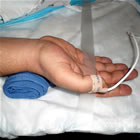
I had my stent inserted on Thursday (two days
ago) through my wrist. I have not asked my Dr. explicitly if I can exercise
the wrist enough to play the trombone immediately or how long I must wait.
I have a performance scheduled for the 4th July and would like to practice.
There has been no abnormality with the entry place and all I have on it
is a piece of gauze and tape.
Marty Nichols, Rockledge, Florida, USA, June 24, 2006
Exercise is the key!! I'm a 36 yr old male, family
history of Early Heart disease. Was overweight trying to get back in shape
when "heartburn" caused me to go to the doctor. Got 2 drug eluting stents,
proceeded to lose 50lbs and began training for a 1/2 marathon, trained
for 6 months with Asthma burning that turned out not to be asthma but another
blockage on the right and circumflex. Ran 20 km 1 day (after some initial
burning) and then 2 days later I couldn't run 500 meters. Back for another
3 stents and now, 6 months later I'm back running 10 km, with absolutely
no pain. DO not exercise through pain that does not go away but expect
some pain twinges, pangs, etc. Exercise builds collaterals!!! Also, exercise
alone cannot save you, a strict diet and proper medication are the keys.
Good Luck
T. S., Canada, June 14, 2006
I am 55 years old-6'4" 195 lbs and I had a heart
attack in November... had 4 stents placed in two arteries. I had an echocardiogram
3 months later showing no damage to my heart and with my Plavix, 81mg asprin,
and Lipitor my cardiologist said you have no restrictions... you may return
to running, weight-lifting (which I was doing at the onset of the heart
attack). I have returned to running (up to 2 miles) but feel somehow less
than reassured I will have another heart attack.... I suppose time will
give me confidence. Are there any guidelines on how much how soon how intense???
Steve Womack, Lee County High School, Sanford, North Carolina,
USA, May 16, 2006
I am 48 Years of age. One year ago I had unstable
angina. Fortunately I was present in the hospital at that time. i rushed
to CCU and was given heparin before any damage to my heart.I was smoker
for last 25 year. I gaveup for last one year. I have reduced my weight
form 88 to 74 Kg. My hight is 5 feet & 7 inchs. I am on statin, 50 Mg tenormin,
loprin and clopideron. I do brisk wale for 80 mints daly and jog for 30
mints on alternate days thear is no problem on doing this. I feel much
fitter even before angioplasty. In apr 2005 1/stent was placed in RCA and
three / in my LAD and left circomflex. My ECG and ETT are normal please
advice wether i can continue this exercise are not i feel much batter and
confident on doing exercise. My max pulse rate rise 140 p/mint while runing.
jamil, Pakistan, May 5, 2006
dear sir , i am 37yrs old with a cypher stent
DES stent in my mid lad about 9 months from now,for ant sep mi, on plavix,
aspirin , atorvostatin, ramipril 5mg now i am doing all my routine works
but not keeping mu regular exercise ,i do a little of motorised tread mill
for 5-10 mins slowly when ever i am free. my weight is arround 85kgs and
my height is arround 5.6" . kindly advise me regarding what precations
should i take and what will be my prognosis with this stent since i have
a single vessel disease and no other diseases like diabetes or hypertension
etc. i am perfectly fit as before mi, and after stenting my ejection fraction
is arround 45. what precations should i take to prevent further attacks
thanking you , bhrgavaram.
bhargavaram, india, May 4, 2006
I had a cypher stent in the LAD in Sept/05. My
cardiologist and I had met a year or so before at the fitness club. After
the procedure, I asked him about exercise. He told me to simply listen
to my body: if you feel angina or gasping for breath after a certain exercise,
slow down or reduce the weight. He told me to use isometrics where the
style and the form of the exercise is more important than how much weight
you use. Other than that, he told me there were no exercise restrictions.
Bernie L., Tennessee, USA, April 29, 2006
I like most everyone on this forum had a stent
placed in the LAD area on April 15th and returned to work April 26th.I
am back to normal exercise and weight lifting and on medication. I am a
44 y/o Male. Does anyone know what the long term prognosis is for us? I
know that to quit smoking, cardiac dieting and regular exercise will help.
Thanks, Joe
Joe, Mission, Texas USA, April 27, 2006
i had angioplasty in November, 2005 and one stent
was inserted. Keeping good health. Strictly following healthy food chart;
taking medicines (aspirin + clopidogrel + atorvastatin). I go for regular
walk 30 to 45 mts. and my weight has come down by 6 kgs. Can I resort to
Yoga, Dumb bells & light weight training. DOCTORS ARE NOT GIVING DEFINITE
ANSWERS. Can anybody advise? Thanks in advance Nellaisivan
nellaisivan, individual, india, April 17, 2006
Basavaraj -- the level of activity you can resume
and how quickly is really something you need to consult your cardiologist
about, since your clinical condition is necessary to know. But ideally
one should be able to resume the activity level they had before stenting.
As for precautions, you need to reduce your risk factors and diet and exercise
are part of that.
Forum Editor, Angioplasty.Org, April 6, 2006
I am 55 years old male undergone PTCA to distal
RCA with special stent (33mm long) implanted on March 31, 2006. What precautions
do I have to take? Can I resume regular exercise, walking, yoga. Please
advise me how to prevent restenosis. thank you.
Basavaraj M, State Bank of Mysore, Bangalore, Karnataka, India,
April 6, 2006
I am 56 yrs old. I underwent angioplasty + stent
in Novr 2005. I hv resorted to healthy food + 40 mts walk in the morning
and 10 - 15 mts Yoga in the evening. I hv reduced 5 kgs weight in the last
4 months. My doctor says, I hv to reuce another 5 kgs. Of course I met
the first target given by him. I am taking aspirin, clopidogrel & cardorone
(heart rate regulation). I feel I am completely alright. This info i wld
like to share with all the patients, while profusely thanking the Almighty
and the Doctors, who hv performed the procedure and for changing my life
style. I had very good support from my wife and two lovely daughters, whose
moral support helped me restore good health. Tks & Good wishes
SIVAN, TAMIL NADU, INDIA, March 4, 2006
It has been one year I had two stents placed after
a mild heart attack,within this year my doctor has checked my heart rate
and heart muscle,BP and asked me to continue by bloodthinner,bp and other
medicines. I am a regular gym freak and this mild heart attak at age of
46 caused lot of awareness, I have been walking and keeping myself active
with normal BP and excellent heart rate, I do not have any other medical
issues nor I had until this heart attack. I am likely to see doctor in
couple of days which will be exactly one year after my heart attack, what
should be my typical questions to him, Can anyone please advise, I shall
be thankful to you all.
Murali, Modi, Charlotte, NC, USA, February 23, 2006
Interesting to see the varied comments. I am fortunate
to have been able, since having a stent inserted using angioplasty, just
over a year ago, (aged 60), to have been able to ride and walk over 1,000
kilometres each since the event. I found some recovery exercise programs
on the AFROX web site that I followed meticulously and have completed two
100 km bicycle "races" and plan a third in March. One also needs (and I
have!) good support and encouragement from family and friends and a Cardiologist
who takes an interest, and one should want to succeed in rebuilding one's
lifestyle in a healthy way.
Doug, South Africa, February 19, 2006
There's lots of info on this forum about returning
to exercise after angioplasty/stent placement, but it looks as if most
everyone is interested in aerobic type fitness activities. I have been
been told to schedule a heart cath/stent placement as soon as is reasonable,
after having a nuclear stress test study late December 2005 showed reversible
ischemia (damaged muscle..) in the left ventricle. I am diabetic (45 years),
female 53 years young, and have been an active aerobic exerciser all my
life, having added intense weight training 7 years ago. That dramatically
improved my fitness level, reduced weight from 149 lbs. to 125 in the first
year, body fat from 29% to 18%. I understand the advisability of returning
gradually to one's former level of strenuous physical activity. I'm seeing
advice ranging from 3-12 months. I am struggling with this;I've been active
in competitive powerlifting for the last 5 1/2 years and have been nominated
to represent the US in the World Masters World Benchpress competition (5th
year in a row!) which takes place April 20-23 this year. I have a very
good chance of medaling this year if I can maintain my current state of
preparedness. Unlike most powerlifters, I do regular aerobic activity:
6 days/week during early part of competitive cycle alternating 3 days 45-120
min. @80-85% max with 20-45 min. on weight training days doing intervals.
I back off on the aerobic activity gradually to the point that 2-3 weeks
before a competition I am only doing 20-30 min. @80-85% max just on weight
training days. I've been told by my cardiologist not to do any heavy lifting
at all - EVER - he said the artery could blow out. I'd almost rather drop
dead of a heart attack than give up the sport I'm so passionate about.
I could back off for a while but not right now!!! Unfortunately the angina
has been getting more frequent, although I rarely have it while lifting,
and if I back off during aerobics, it goes away. So I'm going to be making
a compromise any way I choose and there are no guarantees of outcome either
way. I am wondering if anyone has experienced stent placement closely followed
by any kind of lifting, and if so how much how soon following the procedure?
I figure I can rest completely 3 days, then gradually add low level walking
and stationary bike fitness over the next week and a half, then get back
to some light lifting motions for a week, then gradually increase the intensity
of one-rep max over the last 5 weeks without compromising my potential
performance more than 15-20%, which may or may not put me out of medal
contention. It's either that or wait until after the competition to schedule
the procedure and chance a major cardiac event! Any feedback would be greatly
appreciated!
Jeanne Harms, USA Powerlifting, Fort Collins, Colorado, February
03, 2006
Coleen -- you brought up chelation therapy which
is widely touted on the internet and which, although some think is a "quack" therapy,
is currently
being studied by the National Institutes of Health (NIH) to determine
if it in fact is effective. (I would pause for a moment to remember that
in 1979, cardiologists who practiced angioplasty were also considered quacks.)
Anyway we're just curious how your mother has fared since her Taxus stent.
The drug on the stent is paclitaxel, related to chemo drug Taxol. It is
eluted from the stent over the first few months, but in dosages that are
very small compared to what a cancer patient might take -- just enough
to stop smooth muscle cells from proliferating at the site of the stent,
which would cause a blockage. Also, calcification of the arteries is not
really the problem. It certainly is a symptom, but the problem is atherosclerosis
which is a disease that causes blockages to form in the vascular tree of
the body, sometimes the heart, sometimes, the legs, sometimes the kidney
or neck. Taking antacids every day would not necessarily result in calcium
buildup in the arteries. It's more complex than that. We agree about keeping
a positive attitude and eating smart. Anything people can do to lower their "risk
factors" is wise.
Forum Editor, Angioplasty.Org, January 12, 2006
I had a stent placed in RCA on Dec. 12,
2005. I too got no definitive instructions on exercise. I do get epigastric
pain from the Plavix and Aspirin. I now take them after dinner instead
of breakfast to see if that helps. I understand that I will need to take
them for 9 months. Anyone else get that pain? If so what do you do about
it?
Jean Hartung, Middle Village New york, January 10, 2006
In one of the responses I read the person
said they have low choles. and yet still needed stent. I just recently
learned that the main problem with the hardening of the artieries is
calcification. Calcium carbonate being a problem. Anyone taking antiacids
everyday would likely get a buildup as just one example. Chelation theraphy
administered by a licensed MD. seems to be the answer in the best way
to remove the heavy metals and calcification from your arteries if someone
had high choles. I would recommend researching this. My mom had a Boston
Scientific stent inserted in March of last year. We didn't know at that
time other alternatives. The BS. stent contains a chemo theraphy drug
which emits for approx. 3 months, but then a small amount stays behind
(pellet) permanently. That is not something we would have agreed to getting,
had we known. Eating organic food, veggies and such also helps your body
rid itself of toxins also. Drinking distilled water is the best for you
to drink also. My mother tries to eat all organic foods and most important
is to keep a positive attitude that you are going to be fine. If you
can take control of your thoughts, and you can,if you work at it, your
mind will help your body recover. God wants us to think on things that
are lovely and HE will do the rest. I will pray for you all. Prayer changes
things. God Bless.
Coleen, Rutherford, New Jersey, January 10, 2006
Apparently, we all have the same question;
how much exercise and what kind is okay after our stenting? I am 63 years
old and the recent recipient of five drug eluting stents; three Taxus
in my right femoral artery and two Cordis in the right popliteal. Each
procedure was performed four months a part with a thyroidectomy and radioactive
iodine treatment for thyroid cancer in between. I am on Plavix ("forever" as
my physicians say), full strength Aspirin daily as well as three blood
pressure meds and supplemental thyroid). Prior to these procedures, over
the past several years, I had less and less stamina or endurance, culminating
in extreme fatigue and pain in my legs and now I know the cause. I do
walk my puppy every day, often twice a day, but I'd like to add other
exercises to this. For example, I would very much like to know whether
I could ever risk doing Pilates on the reformer again, or if the risk
of displacing or somehow affecting, the stents is too great.
Nancy, Sedona, AZ, January 6, 2006
I am a fit 51 year young woman from Sydney
Australia G'day! I training 5 days per week at the gym, doing 3 weight
sessions with a personal trainer per week and 2 spin classes per week
(cycling). I weigh 57.8kg and on the 23r4d December 2005, I had just
completed a heavy weight training session with my trainer. I went into
the change room and began to feel sick, sweaty and had pain in my left
arm. I knew I was having a heart attack and had one of my friends call
an ambulance. I had a stent put into my LAD, which by the looks of this
forum is quite common. My father died of a massive heart attack at the
age of 54 but he smoked, drank like a fish and lived hard! I, on the
other hand live clean. My blood pressure on the way to the hospital was
120/70 and is always like that, my cholesterol is 3.1, so unfortunate
genes the doctor said. I really want to get back to my training regime
as well. I would appreviate any help on this please. Happy New Year to
everyone and stay safe.
Karen, Sydney New South Wales Australia, December 31, 2005
I had a STMI three years ago.(0% blockage
to LAD. Symptoms were legs going to sleep visual disturbance high BP.
Agressive pain in left wrist. Since the stent was placed I worked physically
hard 5 days a week-landscaping and reticulated water systems. My stress
test was normal. Ejection fraction 70%. I get palpitation if I drink
caffeine drinks or get dehydrated; but otherwise feel good. my resting
BP is gen about 123/68 and heart rate 57 -67bpm.
JOHN REID, MELBOURNE AUSTRALIA, December 19, 2005
i'm 67 male and had 2 stents in main artery
that was 85% blocked.went back to the gym after 3 weeks told not to exceed
120 beats during workout but to workout to my "hearts content" meaning
how I felt be my guide,so 6 months later I'm on the lifecycle 45 minutes
at 60 to 70 rpms and burn 600 calories per workout 5 days per week. I
maintain 130 beats per minute the last 4 weeks now. Feel great and have
to hold back out of caution. I'm on ace inhibitors, plavix and asprin
and lipitor lost 40 pounds with lifestyle changes. Stress test was a-ok
hope this helps someone.
Robert Tumminia, retired, Toms River NJ USA, December 13, 2005
At age 49 I failed a yearly stress test
and a subsequent catherization showed a 90% blockage of my mid LAD artery.
A medicated stent was used after the angiplasty. I had been going to
a cardiologist for years after my father and bother passed away from
heart disease. I agree with a lot of what I have been reading - patients
are not given enough information after the procedure. I was given the
usual medicines, and a follow up stress echo 1 month after the procedure,
which I passed with flying colors. It was like pulling teeth to get info
out of my doctor as to what to expect, or what were my limitations. One
of the area TV stations had a group of cardiologists on and you could
call in and ask them questions. I asked about limitations and they told
me that their goal with a patient like myself is to get them back to
as close as possible to the lifestyle they had before the procedure.
They both stressed how important the follow up stress test is, and assuming
you do ok on that test, then you basically get back to a normal life.
I asked about exercise, and they encouraged it. I asked if I could jog
and they said yes. What I got out of it is to let your body be your guide.
If you are exercising and you feel strange, short of breath, chest pains
etc, then you stop and call the doctor or if bad enough 911 I still have
many questions but some have been answered
Bill Mulroy, syracuse ny, November 29, 2005
I thought it might be helpful to expand
on my previous post and give some details of the cardiac rehab programme
that I'm on. Bear in mind that this is available to me "free" under the
social medicine scheme in UK known as the National Health Service. No
one therefore has a commercial axe to grind; you can look on this as
best basic practise, certainly in the early months after your op. Immediately
after having the stents fitted, I was advised by the cardiologist that
BY LAW I was not to drive a vehicle for a week. Lifting weights was to
be avoided, but gentle walking was encouraged. After three weeks the
exercise programme was started, two hospital based gym sessions per week,
with an additional supervised country walk (2 -5 miles depending on clinical
circumstances) at weekends. Before the scheme begins everyone has their
drug regime and age recorded, weight taken and BP measured. From that
a pulse rate range is worked out for each person. This varies greatly,
which is why I find some the the postings here disturbing....it all has
to be tailored to the individual by someone professionally qualified.
You can't just pluck a number out of the air based on what you were doing
prior to your op and current drug regime. Every session is preceded by
a BP, pulse rate and pulse regularity check. There is a long warm up
regimen with lots of muscle and tendon stretching. The exercise format
is a form of circuit training, with two sets each of eleven x one minute
exercises. Pulse rates are monitored after each set. There follows a
warm down, relaxation period, and a final pulse check to establish recovery
rates. Whilst light weights are used, weight lifting without foot movement
(ie pumping iron) is specifically disallowed to avoid the problems of
high blood pressure spikes. Swimming and cycling are both encouraged,
provided that the warm up is absolutely thorough..once again avoid high
BP events. The basic course lasts 12 weeks (varies a bit with individuals)
and includes a dietary advise clinic and lifestyle management class on
Monday evenings, and a series of lectures by a dietician, pharmacist,
psychologist, resuscitation nurse and exercise physiotherapist. The whole
show is run by a specialist cardiac nurse with several qualified helpers.
I've found it a great help, particularly in confidence building, not
least by virtue of meeting other old farts all in the same boat. However
your particular rehab is provided, make sure that it contains properly
established and monitored exercise routines, dietary and lifestyle advice,
and the companionship of of fellow travellers. Regards, Eugene
Eugene Molloy, Retired, 59, male, Shropshire UK, November 23
2005
Hi, I am 33 old had an Acute MI on 15 Oct
2005 45 min after physical exercise. i didn't thought it could have been
MI and i tried to bear it for 45 min the thought to take medical help
for which i walked around 1 km with that pain and then i was put into
ICU and told that i have Acute MI. My angiography was done and one artery
was recanalized. now i am on medical leave and tale disprin, metaplorol
and clopid. how normal am i ? i started brisk walking but had pain in
my left leg.
Farhatullah Chauhan, IT Professional, flat no 1057, Rajnigandha
Appts, Dwarka, new delhi, India, November 09, 2005
Hi I had a LAD angioplasty and medicated
stent two days ago. I am 67 and an active runner (former marathoner)
and avid singles tennis player. My doctors have told me I can return
to running in about a week and a half and tennis in about two weeks.
That sounds overly optimistic based on the postings I have just read.
Has anyone out there returned to running or tennis that soon. Thanks
Marvin Fein, Pittsburgh, PA USA, October 22, 2005
I am 47 year old went Angioplasty on 28.09.2005
and doing my all duties with good spirit. i am not feeling any problem
at all.
b, Nhpc LTd, Faridabad Haryana, October 19, 2005
to M. D. Thompson, Tennessee, USA, August
07, 2005 - I am 57 yr old female ,just had stent installed 10/5 and am
experiencing "stretch plain" that you mentioned. Have you found any info
on this? Am very anxious.
PM Frank, Brooklyn, NY , October 13, 2005
I am a 60 year old male who was physically
active with running, cycling and swimming. After diagnosis of angina
with partial blockages I had 3 drug eluting stents inserted on 11th August
2005. I was disappointed with the result at first because I continued
to suffer angina discomfort which became worse as I stepped up my walking
pace or gradient. This lasted at least 2-3 weeks. Now, after 8 weeks
I feel much better. After my 6 week post-op consultation and clearance
for more strenuous exercise I started to run again and have been cycling
for some time. It is hard, like starting again from scratch but I will
build up very carefully. The improvement was week by week rather than
day by day. By the way, don't knock walking as exercise, it's a great
way to start.
Bill Bellis, Leicester UK, October 07, 2005
Greetings. I am 55 years of age. On 8/24/05
I had a heart attack. It felt as if a chicken leg went down the wrong
tube, my teeth started aching, I developed a coating of sweat across
my chest/shoulders and my hands felt like it was about 40 degrees in
the house. Popped a couple of aspirin and had the better half drive me
to the ER. They threw me in a copter and whirled me to the local hospital
and directly into the cath lab where they inserted a drug coated stent
into a 100% blocked artery. I returned 3 weeks later and had two more
stents implanted. The surgeon stated an enormous artery was 95% blocked
and too large for the drug coated variety so a regular stent was inserted.
Another drug coated version was inserted in a smaller artery. Basically,
my instructions were minimal, i.e. no lifting anything over 5 lbs, etc.
They more or less referred me to the rehab folks at the hospital. After
speaking with the rehab folks I decided it would be cost and time prohibitive
to jumb into the program and I have a treadmill, excercycle, health rider,
weights and a lot of other equipment at home. I have competed in judo
from age 6 through 50 and currently hold a world record in the "strict
curl" in weightlifting for my age and weight. Thirty pound dumb-bells
for me are like feather/warm-ups amount for me. Everyone I speak with
acts shocked if I asked about when I can start lifting a little bit.
I really hope I can start lifting again one day and perhaps competing
in judo once again.
Walter, Metro Fight Club, Whitmore Lake, Michigan, USA, October
7, 2005
I'm a 35 year old male and had a heart attack
last Nov. My heart rate fell to 34 beats per minute-they took me in and
put a medicated stent in my circumflex art. I was in icu for 3 days-then
2 weeks later in the hospital again for 3 days. Every since then I have
been feeling pretty good. Before the heart attack I was getting into
trail running-running about 2+ miles every other day. I lost about 44
lbs, was feeling great and running for about 5 months. Then it hit me..
but this year I started running again, and did my first 5k this past
summer. It was an accomplishment, but it never leaves my mind that I
may die next time I go out. I have a stress test tomorrow the 23rd, so
I will see how this heart is doing.
Terry, Englewood Ohio, USA, September 22, 2005
Paul -- we agree!! We are a not-for-profit
site and we are not doctors. But pooling the knowledge of what all of
our users have been advised would be of great help. Thanks for the post.
Forum Editor, Angioplasty.Org, September 19, 2005
This forum would be more useful if people
would (a) ask their doctors these questions, and (b) report back what
they found out, and how things are going later. I had a mild MI in mid-August
and PTCA, followed by a second cath about a week ago to finish up work
that would have put me in dye and x-ray trouble due to time, the first
trip to the cath lab. I smoked my last cigarette about two hours before
the MI, and right now into my second groin-entry-wound recovery in a
month, no problems either time, just followed the instructions. I am
59 years old, male, and in otherwise good health. I feel fine and have
plenty of energy, there was no significant damage to the heart caused
by the MI; this was confirmed by radiological stress test (isotope imaging
before and after treadmill) prior to second cath. I am particularly interested
in long term results with disease mgmt, cholesterol control, and the
plavix-aspirin regimen which I have been told is "for life" by a very
experienced interventional cardiologist. Good luck and good health to
all.
Paul Gooding, Phoenix, Arizona, USA, September 18, 2005
Eugene -- excellent advice!! Your doctor was definitely
correct and, yes, we are also surprised at the lack of post-op rehab advice
that many patients who write in seem to have experienced.
Forum Editor, Angioplasty.Org, September 11, 2005
I am surprised that so many people have
had angioplasties performed but have not (apparently) received any proper
post operative rehab advice. From my own recent experience I offer the
following. My consultant surgeon was keen to point out that the stents
were merely treating the symptoms; they didn't cure the underlying problems
of lifestyle. They had to be addressed by changes to diet, exercise,
and medication. Exercise. Each individual needs a tailored exercise programme.
It's not something that can be plucked out of the air; age, weight, previous
fitness level, and above all medication need to assessed before a regime
is started. It's senseless to measure exercise pulse rates when you are
on beta blockers, without professional advice. Lifting weights isn't
per se a good move; it leads to higher blood pressure levels than is
advisable. Medication. The drug regime that I'm on is common enough in
the UK; a high dose statin, beta-blocker, aspirin, and clopidogrel. Most
people need to be on something similar. Lifestyle. I never smoked anyway,
but it's an absolute no no. The surgeon gave me an LDL target of 2 (UK
money!) and a BP of 120-130 to be achieved through a combination of the
drugs, diet and a hospital based fitness regime. Done that. Diet. Surgeon's
basic advice...."Anything that walks on grass leave alone; if it swims
eat it". I estimate I was 40 lbs overweight with a BMI of 28. I've now
lost 18 lbs in about 12 weeks.
Eugene Molloy, Retired, 59, male, Shropshire UK, September 08,
2005
To Indi Khera, I would be very pleased
to know your latest state of progress. I had no previous history (60
years old) and was very active (X-country and fellrunning, cycling, swimming).
After the usual angina symptoms I had 3 stents installed on 11th August.
After recovering from the procedure I am slightly disappointed because
I felt the angina pain approaching if I stepped up the exercise. Although
I am improving slowly I would love to know if I can look fwd to vigourous
exercise eventually.
Bill Bellis, Leicester UK , September 02, 2005
Hello everyone. A lot of unanswered questions
here - I can only give my experience. I am a reasonably fit 47 year old
man, and a regular exercise swimmer. I had a total blockage in my RCA
and had 2 stents inserted one week ago today (Wednesday). The doctor
said I could resume swimming as hard as I liked from the following Monday.
I did so gently on the Sunday, and have wound it up daily since then.
All the chest pain and shortness of breath is gone, and 40 lengths now
leaves me less winded than 5 did last week. I'm on low dosage Asprin,
Ramiprill, Astorvistatin and Clopidogrel. No discernable side effects
from any of them. The proceedure itself was no problem. I was able to
walk gently within 4 hours, and cut the lawn the following afternoon
(but didn't tell the doctor that). I was told that the only reason tht
I couldn't do more, sooner, was the slight risk of re-opening the femoral
artery cut, and nothing to do with the stenting. I am delighted with
the result, and would approach the same proceedure again with no fear
whatsever.
Tristram Torrance, Oxford, England, August 31, 2005
Dear Mr.Rehan Siddiqi It is extremely unfortunate
that some one with your activity profile had to under go the procedures.
In my opinion all you have to be vigilant about is restenosis(re occurrence
of the formation of plaque in your arteries). A controlled diet/excercise
program along with your prescribed medication can be very helpful. I
am 50 years of age and had my angioplasty done(one stent in the left
artery) on July 26 ,2005 and since then I have been more devoted to my
brisk walks(about 45 mins a day) and a low cal/high fiber diet. in order
to attain better awareness on this subject, I do a lot of net surfing
and have managed to gather some useful info/tips; I believe it would
be wonderful if we can touch bases and exchange our views. This might
be helpful for both of us. With kind regards --
Capt.S.K.Umer, Bulk Shipping, Karachi, August 27, 2005
I had a stent placed for an 80 percent blockage
to my RCA on August 4th. I too was told the no lifing over 10 pounds
for 7 days etc. I had a the newer trans radial approach so I didn't even
have to lie flat afterwords. I would like to know when I can resume walking
and exercising again. I have searched the internet and this seems to
be the only site that I get directed to.
charles m brown, Rockville, IN, August 10, 2005
Hi, I am a 48-year-old male who has always
been very active and average 4 times per week in the gym where I lift
weights and run approx 3 miles on the treadmill. Recently I had a silent
MI and after angioplasty, my cardiologist found 99% blockage in my LAD.
A 3.0 x 23mm Cypher stent was inserted. I saw my cardiologist at the
end of June, six weeks post-surgery, who reported my blood test results
to be fine. I was told I could resume my workouts, but in a moderate
manner. Since the stent was placed in May, I have had two occasions of
which I have taken nitro pills. Each time the ECG's, bloodwork and other
tests have shown no problems. My troponin is at .2 with the CK markers
being a little high at 246. At almost three months now, I still feel
this minimal yet aggravating "rawness" and "heartburn-like" discomfort
that comes and goes with no rhyme or reason. Obviously this causes anxiety,
worry, and depresses me to the point that I really have no energy for
the gym, much less my work. I have researched and found that certain
tests have been documented that have proven "stretch pain" because of
the stent. How long and when do I get my real self back? If any of you
can relate, please respond.
M. D. Thompson, Tennessee, USA, August 07, 2005
Hi I am 44 years old, a keen hockey player
and go to the gym 3 times a week. I was reasonably fit, was not getting
any chest pains or breathing problems. I have a family history of high
cholesterol and my father had a heart bypass at the age of 50. My Heart
rate is 60 bpm (relaxing) , BP is 123/85 (which is normal) and my ejection
fraction is 70% (diagnosed during the angiogram).3 months ago i was diagnosed
with a 100 % blockage in my RCA. The cardiologist stopped me from going
to the gym and doing any exercise (apart from a gentle walk around the
block) to prevent me doing any damage to the heart muscle. I had 2 drug
eluting stents inserted last Wednesday (20th July 2005) during a 90 min
procedure. I was allowed to leave hospital the following day, Thursday
21st July 2005. The cardiologist suggested I stay away from the gym for
about a week to let the puncture wound in the groin seal properly, and
then I can resume my physical activity as before. Therefore I plan to
start going to the gym on Monday 1st August and gradually build up my
fitness and resume playing hockey in about 6 weeks time. I hope this
helps because like you guys I was dreading not being able to go to the
gym and being told to stop playing hockey post op.
Indi Khehra, UK, July 26, 2005
Hi. I am 56 years old. On 12th July 2005,
I felt shortness of breath with BP shooting upto 195/135. Immediatetely
I went to doctor and in the angiogram next day, the LAD had 75% eccentric
long mid segment stenosis and the LCX had tight 99% stenosis in the mid
portion.Two stents of Cordis/ J&J were deployed in the angioplasty done
on the same day. Now after two weeks, I feel OK. However, since yesterday,
I am feeling low pain around left shoulder and chest. If I take up long
walks now, will it be OK? Or should I wait.
PR Gandhi, Indian Rayon and Industries Ltd., Halol/Gujarat/India,
July 25, 2005
Hi. I am 49 years of age and am a competive
cyclist. I have been just diagnosed with having two blockages in right
artery which will necessitate me have a stent placed in right artery.
I had no chest pain or any symptoms. Blood Pressure normal etc. I have
family history, father died at 50 and my brother has angina My Gp said
heart may have adapted through years of competitive exercise How long
after stent is inserted can you expect to get back to competitive exercise.
I would be grateful for any information that can help me with recovery
program as cardiologists idea of exercise is walk around block. I would
normally cycle 200--300 miles a week and go to gym twice a week many
thanks John
John Duffy, Leydens, Dublin Ireland, June 23, 2005
I HAVE HAD TWO STENTS PLACED IN MY HEARTH JUST
7 WEEKS AGO AND WISH IF YOU CAN ADVISE ME ON WHAT TYPE OF EXERCISE IS BEST
FOR ME . I AM WALKING FOR HALF AN HOUR A DAY BUT WISH TO START CYCLING
. YOUR ADVISE PLEASE.
OLIVER CHETCUTI, MALTA, June 20, 2005
Yvonne, this is a user-generated Forum. People
post questions, others answer -- occasionally we come in with a comment
or information source. But this is not an "Ask The Doctor" forum
-- we're a not-for-profit site and the Forum exists for patients to air
their concerns and help each other. We'd most appreciate any insight or
experience that you might want to add.
Forum Editor, Angioplasty.Org, June 09, 2005
Where are the responses to these concerns?
Yvonne Daniels , Fayetteville, NC USA, June 08, 2005
Rose, just wondering -- with a 95% blockage on
the LAD, did the cardiologist discuss treatment with angioplasty/Stenting??
Forum Editor, Angioplasty.Org, May 29, 2005
Hi, I'm 57 years old and had what I thought was
gastric reflux for the past 4 weeks. May 15, I went on a 5 mile walk with
my husband and had to stop frequently due to chest discomfort in a very
small area of breastbone which went away when I stopped walking. I casually
mentioned it to my daughter, a radiologist, that night.I followed her advise
and tried, unsuccessfully, to reach my doctor Monday morning. I went to
the ER. Due to my symptoms and a family history of heart disease ,I had
a cardiac catherization.I had a 95% blockage of the proximal left anterior
descending artery (LAD). My doctor sent me home with 6 medications and
on strict bedrest for 1 week. After that I can increase my activity by
1 mile per week.I'm glad I found this site.
Rose Galla, Scarsdale, New York USA, May 20, 2005
I am interested to see the answers to the above
questions/situations ! 2. In particular I want to know if a patient with
stents inserted about 4-5 months back, is allowed to do jogging / running
?
Adarsh K. Singla, Gurgaon, Haryana, India, May 19, 2005
Hi, I 55 and had angioplasty 18 Feb,2005. Had
80% blockage LAD. Was working out when chest pain hit, of course I thought
it was just heartburn, since I had had it off and on for 2 days. Even told
my husband if I got heartburn again I would go to doctor. Well pain went
away, so I jumped back on gazelle. About 5 minutes later I got a sharp
pain, became sick to my stomach and left arm when numb. I got to telephone
and called 911. I got my dogs into the house and then went outside to wait
on ambulance. Well 48 hours later I have a stent. The only information
given after stent placement was: Do not lift more than 10 pds for a week,
no sitting in bathtub, take all your medications and by the way resume
normal activities after 2 days, letting your pain be your guide. Well did
all and am walking 1 hour a day, 5 to 6 days a week, and I am exhausted.
I just cannot seem to feel rested .Is this the norm? Is there a magic time
frame when I will began to feel normal or is this it? In all fairness I
am taking about 7 medications, same as ya'll I'm sure. I just want to know
whats down the road. My doctor is great, but must have missed the bedside
manner class. So I turned to the internet and found ya'll. God bless ya'll.
Any informtion would greatly be appreciated.
Wanda Honeycutt, retired, Holly Grove, AR, April 21, 2005
I am a 54 year old instructor. Although I was
athletic in the past, about 2 years ago my schedule changed and I was unable
to continue going to the gym or maintaining any high level of physical
activity. I this week I had a stent put into my left coronary artery. I
am wondering what sort of exercise I can do and when I can start. Thanks.
Steele Ford, Oklahoma City, OK, USA, April 16, 2005
I am a 61 year competitive racewalker and hike
leader. Feb of this year I started noticing a slight shortness of breath
in the 90% of max HR zone. The stress test EKG also indicated some irregularities
at the higher heart rates. The thallium indicated the lack of blood supply
to the bottom of my heart. I went in for an angiogram and it was discovered
I needed 1 stent in the LAD and 3 in the Mid RCA. The sheath removing nurse
over applied pressure to the wound and caused a terrible Subdural Hematoma
and because it was the second day of procedures, the pain from the soreness
almost caused me to pass out. But using some breathing techniques I had
learned in Yoga I managed to stay conscious.
It's now been 1 week since the procedures and I
walked last night at a heart rate of 120 for a distance of 4.5 miles. My wound
is black and blue and a lump about the size of a quarter has developed.. The
hospital and doctors are useless when it comes to recommendations. They seem
to choose the conservative advice Don t do anything until we see you in 10 days
.
My position at this point is and well remain unless
something changes it:
- I will train at
a heart rate of 120 (60% of Max) for 4 weeks (1 hour per day)
- At week 5 I will
alter schedule to 50% days = 120 bpm and 50%= 125 bpm
- At week 6 50%=125
bpm and 50% 130 bpm
I plan to continue this until I reach 80% of MHR and at that time begin to
increase distance using the same strategy of 50%. Of course the overriding
factor in all of this is Listen to your body Only you know your body and it
s your responsibility to make sure you do everything to stay well and healthy.
Jim Norvill, Atlanta GA, April 13, 2005
Hi, I am f. farzaneh an medical doctor(gp)
from iran. i have 30 years old. my weight is 92, and my height is about
161cm. my bmi is high, i know. in 7 march 2005 i have an unstable angina
pectoris and high positive stress test (exercise test) that i have to
balloon angioplasty and undergo stent (cypher). i must reduce my weight
but i can not effort very good and i have not good state yet therefore
i want from u that give me n route for reducing my risk factors thanks
farshid farzane, doctor, tehran iran, March 31, 2005
Hi I'm 59 years old and had a stent placed in
the circumflex artey 3 years ago. I had been reasonably active until around
age 53 with frequent jogging. My knees gradually put a stop to it and I
became far less active. A very mild heart attack led to the stenting which
was done at Beth Israel in Boston. This all took place over a matter of
a few days, so it pretty well rang the bell on mortality created an instant
believer in watching my diet, as well as fear and curiousity as to what
I could reasonably hope to do on a physical level. My cardiologist at the
time seemed rather cavalier about activity, neither restricting me or encouraging
healthy living. Excercize and diet did not appear to be high on his own
personal priorities, so I felt pretty much on my own to find some guideposts.
Three months after the stent I joined a wellness program through Beth Israel
that provided a systematic approach to diet, stress management and regular
exercize. The program was extremely helpful in easing me into a more active
lifestyle, while putting underlying fears in a more reasonable context.
I felt more in touch with my body and capable of gauging how far I could
reasonably push myself. I now engage in all physical activities I enjoy,
while following a daily regimen of biking during warm months and using
the treadmill during colder ones. I use yoga and moderate weight training
as well. I feel and look better than I did ten years ago. I'd recommend
a structured wellness program as a wise and reassuring approach to regaining
one's self confidence after stenting or any procedure where something as
vital as the heart has been touched.
Robert Curran, Mass. Rehabilitation Commission, Taunton, MA, 02780,
March 30, 2005
We've gotten a number of questions in this topic
about level of safe physical activity and exercise after having angioplasty.
I am curious -- are hospitals and physicians not giving patients these
recommendations? The amount of exercise and activity post-procedure should
be tailored to the clinical condition, age, etc. of each patient, so general
recommendations may not be that helpful. If you've had an angioplasty,
please share your experiences with us here about the recommendations and
follow-up you have or have not gotten from your physician.
Forum Editor, Angioplasty.Org, March 29, 2005
Astounded that so many have unanswered questions.
I had a heart attack 95% blockage stent etc. Next week I start an eight
week rehab programme of exercise and education. It's free and run by my
local hospital.
Thomas Mc Mahon, Dublin 7 Ireland, March 29, 2005
I had my angioplasty last week. This is the last
thing I imagine could happen to me. I am playing tennis for last 20 years.
It was nice to read the responses. I will be very happy to get information
about angioplasty
M. Rehan Siddiqi, Forman Christian University, Lahore, Pakistan,
March 26, 2005
Hi. My dad underwent angioplasty and stent therapy
2 days back. I would like to know what kind of exercises and diet he needs
to follow once he's home. Can anyone please let me know on this? Thanks
in advance!
Jill, India, March 16, 2005
I am a 77 yr old female. I had coronary stents
on Feb 5 and one on Mar 2. Bleeding difficulty with the second procedure
at the entry site. Still some swelling and tenderness. Dr ok to travel
on 3/18. Any suggestions as to limitation on playing golf a couple of times?
Jane Defoyd, Retired, Austin, Texas, USA, March 12, 2005
Hi I am scheduled for a Cardiac Catheterization
in 7 days and my Dr said I may need a stent. I am 66 and compete in Triathlons
2-4 times a year and am scheduled to compete in the National Sr. Olympics
June 14-17 2005. What is a realistic expectation to go back to training?
Kenneth McKinney, Phoenix Triathelon Club, Sun Lakes Arizona,
USA, February 04, 2005
|